Preparing and Training Schools and Staff for the Next 15 Years Transformation Is Organizational, Not Just Technological

Preparing and Training Schools and Staff for the Next 15 Years Transformation Is Organizational, Not Just Technological

  1. Redesign School Leadership Structures

Schools need new roles:

  • Chief Digital / Innovation Officers
  • AI Curriculum Leads
  • Data Protection & Cybersecurity Officers
  • Learning Experience Designers

Traditional hierarchies must evolve into cross-functional teams.


  1. Mandatory AI & Digital Pedagogy Training

Every educator must understand:

  • AI capabilities and limits
  • Ethical use of AI
  • Data privacy responsibilities
  • Classroom AI integration models

Training must be:

  • Continuous
  • Practical
  • Certified


  1. Infrastructure as a Strategic Investment

Future-ready schools require:

  • High-speed connectivity
  • Secure cloud systems
  • Device equity (1:1 models)
  • Centralized analytics dashboards

Infrastructure gaps translate directly into learning gaps.


  1. Culture Change: From Fear to Fluency

The biggest barrier is not technology—it is fear.

Schools must:

  • Normalize experimentation
  • Encourage failure as learning
  • Reward innovation
  • Protect teachers during transition phases


Key Takeaway

Prepared schools are not those with the most technology, but those with the most adaptable people.

The Future of K–12 Education: 5, 10, 15 Years and Beyond

The Future of K–12 Education: 5, 10, 15 Years and Beyond

The Future of K–12 Education: 5, 10, 15 Years and Beyond

From Institutions to Learning Ecosystems

Education is transitioning from content delivery to capability development.

Next 5 Years (2025–2030): The AI Integration Phase

  • AI becomes a daily classroom assistant
  • Automated grading and feedback normalize
  • Hybrid learning models dominate
  • Teachers shift to facilitators and mentors
  • Digital portfolios replace report cards

Schools that delay AI integration will face relevance gaps, not just skill gaps.


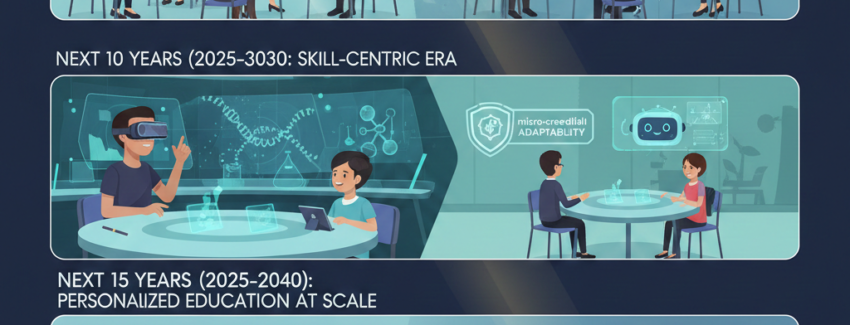
Next 10 Years (2030–2035): The Skill-Centric Era

  • Curriculum reorganized around skills, not subjects
  • Micro-credentials embedded into schooling
  • VR and simulation labs replace traditional labs
  • Emotional intelligence and adaptability assessed formally
  • AI tutors provide 24/7 learning support

Schools become learning experience centers, not buildings.

Next 15 Years (2035–2040): Personalized Education at Scale

  • Each student follows a unique learning pathway
  • Graduation is competency-based, not age-based
  • Teachers act as learning architects
  • Schools merge with higher education and industry
  • AI predicts learning needs before failure occurs

The concept of a “standard classroom” disappears.

Key Takeaway

The future of education is adaptive, intelligent, and human-centered. Systems that resist this evolution will not collapse—but they will slowly become irrelevant.

What Schools in Each GCC Country Should Do Next (2025–2030 Roadmap)

What Schools in Each GCC Country Should Do Next (2025–2030 Roadmap)

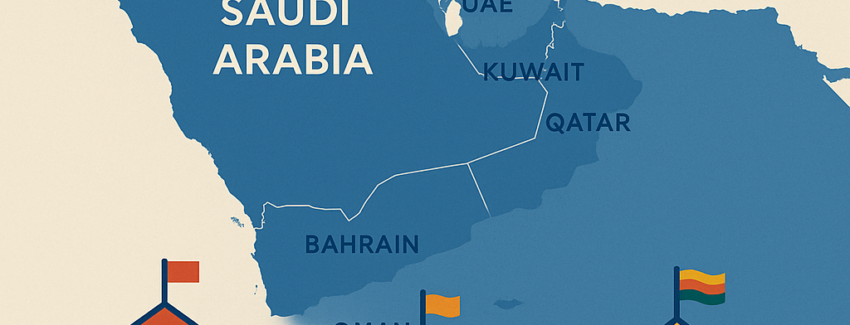
The GCC education ecosystem is evolving faster than ever. Each country—Saudi Arabia, UAE, Qatar, Bahrain, Kuwait, and Oman—has unique strengths, challenges, and government visions. This article outlines the strategic next steps schools in each country must take to remain competitive and future-ready.

Saudi Arabia — Vision 2030 Demand for Innovation

Saudi schools should prioritize:

  • Full digital transformation (LMS, ERP, attendance automation, AI-powered management)
  • STEM + robotics integration into weekly curriculum
  • Data-driven school operations
  • Teacher upskilling for AI literacy
  • Compliance adoption (PDPL, cybersecurity, accreditation)

Saudi Arabia has scale—and now needs modernization.


UAE — Maintaining Global Education Leadership

UAE schools should focus on:

  • Curriculum innovation with AI, space tech, digital finance
  • Personalized learning pathways
  • Partnerships with tech companies
  • Competency-based assessments

UAE already leads in international schooling; the next step is deeper innovation, not expansion.


Qatar — Enhancing Private Sector Quality

Qatari schools must:

  • Improve learning outcomes through analytics
  • Reduce curriculum fragmentation
  • Adopt unified digital portfolios for students
  • Strengthen teacher recruitment and professional development


Kuwait — Modernize Infrastructure

Kuwaiti schools must rapidly:

  • Upgrade digital infrastructure
  • Shift from textbook-heavy methods to project-based learning
  • Adopt AI tools to assist teachers


Bahrain — Strengthening International Curriculum Standards

Bahrain’s schools benefit from diversity but need:

  • Unified digital student systems
  • Increased STEM labs and AI labs
  • Enhanced cybersecurity readiness


Oman — Scaling Private Sector Innovation

Oman should focus on:

  • Diversifying curriculum offerings
  • Digitizing government schools
  • Teacher training in AI tools & modern pedagogy


Conclusion

Every GCC country has a unique path—and the schools that adopt AI, digital systems, compliance, and future-ready learning will lead the next decade.


GCC School Landscape Report 2025

GCC School Landscape Report 2025


A Comprehensive Overview of Government, Private & International Schools Across the Gulf

The Gulf Cooperation Council (GCC) continues to experience rapid growth in the education sector, driven by population expansion, economic diversification, and national visions focused on human capital development. As of 2025, the GCC hosts tens of thousands of schools across government, private, and international sectors, reflecting a dynamic and competitive educational environment.

This report summarizes the latest available school counts for each GCC country, highlights important trends, and provides a consolidated view of the regional education ecosystem.

  1. Country-by-Country Breakdown (2025 Updates)

Saudi Arabia

Saudi Arabia remains the largest education market in the GCC, with one of the most extensive public-school networks in the world.
Latest published statistics show:

  • Government Schools: 24,384
  • Private Schools: ~6,847
  • International Schools: ~100+ (varies by definition/curriculum)

Saudi Arabia’s private sector continues to grow steadily, driven by Vision 2030 reforms and strong demand from expatriate communities. Public schools still account for the majority—more than 78% of all schools.


United Arab Emirates

Data availability varies across emirates, but Dubai is the most transparent and internationally benchmarked.

Dubai Alone (2024–2025):

  • Private Schools: 227
  • International Schools: Included within private categorization

UAE-Wide Estimates:

  • Government Schools: ~300–400
  • Private Schools: ~580+
  • International Schools: ~800+
    (The UAE has one of the highest densities of international schools globally.)

The UAE continues to be the most diverse schooling ecosystem in the region, with over 15 international curricula and strong investment from global operators.


Kuwait

Kuwait’s school data is less frequently updated publicly, but consistent ranges indicate:

  • Government Schools: ~650–660
  • Private Schools: ~580–600
  • International Schools: ~400–500

Kuwait has a balanced mix of public and private schools, with international schools playing a major role to meet expatriate community needs.


Qatar

Qatar’s education sector is expanding with international operators and increased private-sector participation:

  • Government Schools: ~210–220
  • Private Schools: ~330–340
  • International Schools: ~90–140

Private education in Qatar accounts for more than half of all schools, driven by Doha’s rapidly growing expat population and Qatar’s long-term national development plans.


Bahrain

School count variations exist due to different classification criteria and KG inclusion.

  • Government Schools: ~200–210
  • Private Schools: ~76–287
  • International Schools: ~70–100

Despite its small size, Bahrain maintains a diverse mix of private and international schooling options.


Oman

Oman publishes detailed open datasets that make its statistics clearer than most GCC countries.

  • Government Schools: 1,287
  • Private Schools: ~360
  • International Schools: 47

Oman’s private education sector is steadily expanding as part of its Vision 2040 objectives.


  1. GCC-Wide Totals (2025 Estimates)

Using updated numbers and midpoints for ranges where countries do not publish exact data, the regional totals can be estimated as follows:

 Government Schools (Total GCC)

? 27,097 schools

 Private Schools (Total GCC)

? 8,892 schools

 International Schools (Total GCC)

? 1,597 schools
(This is a subset—many international schools are counted inside the private-sector totals.)

 Overall GCC School Count (Government + Private)

? 35,989 schools

This confirms the GCC as one of the largest and fastest-evolving education regions in the world, with heavy investment in digital transformation, accreditation, compliance, and internationalization.


  1. Key Regional Trends in 2025

 Accelerated Private School Growth

Private and international schools are expanding faster than public schools in most GCC countries, especially in the UAE, Qatar, and Saudi Arabia.

 National Visions Driving Reform

Saudi Vision 2030, UAE Centennial 2071, Bahrain Vision 2030, and Oman Vision 2040 all place education modernization as a core pillar.

 Increasing Demand for International Curricula

British, American, IB, Indian, Filipino, and bilingual programs continue to dominate private sectors, especially in the UAE, Qatar, and Bahrain.

 Digital Transformation & AI Adoption

The GCC is leading digital education adoption:

  • ERP systems
  • AI-assisted learning tools
  • Smart classrooms
  • Data-driven school management

This modernization wave creates opportunities for EdTech providers, consultants, and entrepreneurs.

 Expansion of Regulatory & Compliance Requirements

Schools are increasingly required to align with:

  • National accreditation standards
  • Cybersecurity frameworks
  • Data protection policies (e.g., PDPL in KSA)
  • ISO 21001 for educational organizations

This creates new service markets across the region.

Conclusion

The GCC education ecosystem in 2025 is vast, fast-growing, and undergoing significant modernization. With nearly 36,000 total schools, including more than 1,600 international schools, the region represents a powerful opportunity for school operators, EdTech innovators, and educational consultants.

As GCC countries push their national visions forward, education remains at the center—driving economic transformation, digital capability, and future-ready skills for the next generation.


Verification: 1544cdbd1105873e