Personal Improvement
 The car is packed and you’re ready to go, your first ever cross-country trip. From the
White Mountains of New Hampshire to the rolling hills of San Francisco, you’re going to see it all.
You put the car in gear and off you go. First stop, the Baseball Hall of Fame in
Cooperstown, New York. A little while into the trip you need to check the map because you’ve reached an intersection you’re not familiar with. You panic for a moment because you realize you’ve forgotten your map. But you say the heck with it because you know where you’re going. You take a right, change the radio station and keep on going. Unfortunately, you never reach your destination.
Too many of us treat goal setting the same way. We dream about where we want to go, but we don’t have a map to get there.
What is a map? In essence, the written word
What is the difference between a dream and a goal? Once again, the written word
But we need to do more than simply scribble down some ideas on a piece of paper.
Our goals need to be complete and focused, much like a road map, and that is the purpose behind the rest of this article.
If you follow the 7 steps I’ve outlined below you will be well on your way to becoming an expert in building the road maps to your goals.
Life consists in what a man is thinking of all day.
-Ralph Waldo Emerson
1. Make sure the goal you are working for is something you really want, not just something that sounds good.
I remember when I started taking baseball umpiring more seriously. I began to set my sites on the NCAA Division 1 level. Why? I knew there was no way I could get onto the road to the major leagues, so the next best thing was the highest college level. Pretty cool, right. Wrong.
Sure, when I was talking to people about my umpiring goals it sounded pretty good, and many people were quite impressed. Fortunately I began to see through my own charade.
I have been involved in youth sports for a long time. I’ve coached, I’ve been the
President of leagues, I’ve been a treasurer and I’m currently an Assistant State Commissioner for Cal Ripken Baseball. Youth sports are where I belong; it is where my heart belongs, not on some college diamond where the only thing at stake is a high draft spot.
When setting goals it is very important to remember that your goals must be consistent with your values.
2. A goal cannot contradict any of your other goals.
For example, you can’t buy a $750,000 house if your income goal is only $50,000 per year. This is called non-integrated thinking and will sabotage all of the hard work you put into your goals. Non-integrated thinking can also hamper your everyday thoughts as well. We should continually strive to eliminate contradictory ideas from our thinking.
3. Develop goals in the 6 areas of life:
|
Family
|
and
|
Home
|
|
Financial
|
and
|
Career
|
|
Spiritual
|
and
|
Ethical
|
|
Physical
|
and
|
Health
|
|
Social
|
and
|
Cultural
|
|
Mental
|
and
|
Educational
|
Setting goals in each area of life will ensure a more balanced life as you begin to examine and change the fundamentals of everyday living. Setting goals in each area of life also helps in eliminating the non-integrated thinking we talked about in the 2nd step.
4. Write your goal in the positive instead of the negative.
Work for what you want, not for what you want to leave behind. Part of the reason why we write down and examine our goals is to create a set of instructions for our subconscious mind to carry out. Your subconscious mind is a very efficient tool, it cannot determine right from wrong and it does not judge. It’s only function is to carry out its instructions. The more positive instructions you give it, the more positive results you will get.
Thinking positively in everyday life will also help in your growth as a human being.
Don’t limit it to goal setting.

5. Write your goal out in complete detail.
Instead of writing “A new home,” write “A 4,000 square foot contemporary with 4 bedrooms and 3 baths and a view of the mountain on 20 acres of land.
Once again we are giving the subconscious mind a detailed set of instructions to work on. The more information you give it, the more clear the final outcome becomes. The more precise the outcome, the more efficient the subconscious mind can become.
Can you close your eyes and visualize the home I described above? Walk around the house. Stand on the porch off the master bedroom and see the fog lifting off the mountain. Look down at the garden full of tomatoes, green beans and cucumbers. And off to the right is the other garden full of a mums, carnations and roses. Can you see it? So can your subconscious mind.
6. By all means, make sure your goal is high enough.
Shoot for the moon; if you miss you’ll still be in the stars. Earlier I talked about my umpiring goals and how making it to the top level of college umpiring did not mix with my values. Some of you might be saying that I’m not setting my goals high enough. Not so. I still have very high goals for my umpiring career at the youth level.
My ultimate goal is to be chosen to umpire a Babe Ruth World Series and to do so as a crew chief. If I never make it, everything I do to reach that goal will make me a better umpire and a better person. If I make it, but don’t go as a crew chief, then I am still among the top youth umpires in the nation. Shoot for the moon!
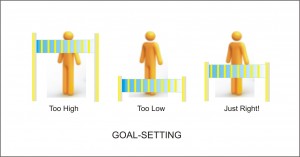
7. This is the most important, write down your goals.
Writing down your goals creates the road-map to your success. Although just the act of writing them down can set the process in motion, it is also extremely important to review your goals frequently. Remember, the more focused you are on your goals the more likely you are to accomplish them.
Sometimes we realize we have to revise a goal as circumstances and other goals change, much like I did with my umpiring. If you need to change a goal do not consider it a failure, consider it a victory as you had the insight to realize something was different.
Personal Improvement
[ca_audio url=”https://saifullahkhalid.com/audio/01ABT-Self-Discipline.mp3″ width=”500″ height=”27″ css_class=”codeart-google-mp3-player”]

Uncategorized
 INTRODUCTION
We all play many parts in life: daughter or son, sister or brother,
parent, boss, employee, leader, assistant, friend. We also play
many different characters, sometimes in a single day: we can be a
hero at work and an average Joe at home, or vice versa. But what
if beyond all those parts and characters, there is a more fundamental
role you can play—your true self, the you who is uniquely you?
What if you were so familiar with this role that you were completely
comfortable with yourself and at ease in all circumstances?
There’s a wonderful story about a rabbi who dies and goes to
heaven. He has led a devoted life, following as closely as he could in
the footsteps of the prophets and sages, and so, naturally, he expects
God to greet him with praise. But when the rabbi arrives at the
pearly gates, God just looks at him and says, “I made you uniquely
you. Why did you spend your life trying to be someone else?”
This book is a guide to being yourself. The reflections, practices,
and inspirational quotations are designed to assist you in
becoming who you really are. Only you can answer the question
posed in the title: What’s it like being you? But in these pages, you
can explore a variety of approaches to help you connect with your
true self.
First and foremost, this book is practical, aimed at giving you the
experience of living in your true self as both a spiritual practice
and an antidote to the stress of modern life. We now have
conclusive evidence that stress has serious health consequences,
weakening the immune system, damaging the heart, and affecting
memory cells in the brain—just for starters. In a recent New York
Times article, neuroscientist Bruce S. McEwen of Rockefeller
University pointed out:
We’re now living in a world where our systems are
not allowed a chance to rest, to go back to base line.
They’re being driven by excess calories, by
inadequate sleep, by lack of exercise, by smoking, by
isolation, or frenzied competition.
But there is truly no rush to go anywhere. Nobody is leaving
this earth alive. The true self waits patiently for us to come to it.
So why not slow down and enjoy the path of self-discovery?
Lao Tsu, the ancient Chinese philosopher, said: “In the pursuit of
learning, every day something is acquired, and in the pursuit
of spirit, every day something is dropped.” It is my hope that in
addition to gaining something from reading this book, you will also
come away feeling lighter and freer from having let something go.
The false self (everything that is not truly you) is what you
s u render in the process of becoming who you are. When you strip
away the opinions and postures and addictions of the ego-driven
personality, what remains is the role of a lifetime—playing yourself.
You can start anytime. Why not right now? As you move away
from the self-defeating patterns of the false self, you move closer
to the source of nourishment and renewal. Here in the true self—
the Soul—we find Spirit, and we come alive.
Please Note:
The following words are used interchangeably
throughout the book:
False self, personality, ego
True self, Soul
God, Spirit
The John-Roger quotations on the left-hand pages
are designed to assist you in attuning to the true self.

Personal Improvement, Research & Reports
 The dictionary defines it as trust or faith, being sure. I believe it means feeling good about yourself, especially in regard to accomplishing something. That something can be a new job, a new assignment, a performance review, networking, or a meeting with co-workers.
Here are a few actions that will result in real payoffs in our confidence quotients.
MOVE
No, not to a new job or neighborhood. Move your body. Take the stairs instead of the elevator. Park farther away from the store you’re about to visit. Walk. Run. Ride a bike. Do yoga. Lift weights, even if it means doing your reps with a five-pound bag of flour in each hand. Work up a sweat. You’ll feel better.
The bottom line is, when we feel better, we become more confident. Exercise clears the brain and the lungs, making room for newer, better, and possibly bolder thoughts. It gives us more energy. And – let’s face it – energy is attractive. Energetic people magnetize others.
Nothing enhances your overall appearance like being fit. A good regimen of exercise will improve not only your posture but your personality. I believe that fit people look more focused and more confident.
Exercise not only increases strength and endurance. I find, too, that it helps mightily to defuse anger and frustration, and it gets the creative juices flowing.
TAKE A LOOK AT WHAT YOU ARE WEARING
There is no such thing as neutral clothing. Everything you put on represents a decision you have made and is a reflection of your good taste, your good sense, and your style. Remember, we judge others more on the basis of what we see than anything else. If your attire is inappropriate, colleagues are apt to question whether you know the rules of the game and whether you are or are not likely to be a significant player. Your superiors are apt to conclude that the quality of your work will match the quality of your appearance.
When you’re considering how to dress for a work situation, ask yourself these questions:
* Who am I?
* What role am I playing?
* How do I want to be perceived?
* Where am I?
* Who are the people I want to impress favorably?
We’re not talking fashion statements here; we’re talking about what works in a given environment to be effective.
Grooming is everything. Develop four key relationships and you won’t go wrong:
* Tailor: Good fit can make an inexpensive garment look like a million, while poor fit can make even an Armani look sloppy.
* Dry cleaner: The chemicals can be damaging to fabrics, so go to a reliable establishment and inspect your garments before leaving the shop.
* Shoemaker: We all notice other’s shoes, mostly because we often get nervous and end up looking at the floor. Keep shoes well soled, shined, and in good repair.
* Dentist: A clean, bright smile makes us feel better about ourselves.
BREATHE
Find sanctuary inside yourself. There is honor in standing still. We are so time-crunched, information-bludgeoned, downsized, and multi-tasked that it’s spiritually suffocating. Who we really are comes from the inside out. Without a way to “go inside” and focus, we add to our environment’s chaos rather than its harmony.
Learn “belly breathing”: lie down on the floor, be quiet and place your hands on your tummy. Breathe from your belly, letting your belly rise and fall like a bellows. Babies breathe this way and we know how self-confident they are. I’ve learned to belly breathe on elevators, in rest room stalls, and in the middle of crowded rooms when I need to calm down and focus. No need to “om”.
BE DISCIPLINED
Keep your agreements.
Be on time.
Be mindful and in the present.
That is a gift to yourself as well as others. Whatever we think and feel now creates what happens in the future. When we stick to the “now” and don’t chase rabbits, we are involved and aware of opportunities. Others we deal with will sense that we’re fully with them. That has tremendous impact on the quality of our personal and professional relationships.
GIVE AND RECEIVE
Give whatever you hope to receive in turn. If you want more cooperation and respect, give respect and cooperate. If you want to succeed, help others succeed. If you want more joy, be more joyful. When we circulate our positive energy, we create more and more to enjoy.
* Be open to giving to yourself. Honor your own worthiness to receive or no one else will.
Perhaps, as you read this, you are thinking, “Yeah, so tell me something new. I know this already.”