Personal Improvement, Research & Reports

Just because it’s common, that doesn’t mean it’s not risky. Many people fall into the misconception that if a lot of people are doing something, it must be the safest path. If you were born several decades ago, you would have thought smoking was safe because everyone was doing it.
Is Having a Job Safer?
I earn my entire income from running this website. I love working on it and there is incredible potential for growth. But one of the common criticisms I get is that I’m taking on a riskier path than someone getting a job. In their minds, because a job is more common than online entrepreneurship, it must be safer.
Tell that to the factory workers from big auto companies that recently lost their jobs. Was it safer to adapt to an overpaid job in an aging industry? My income in the next few years may suffer because of the recession, but at least I can’t be fired.
Unconventional Wisdom
The common self-help dichotomy is the safe and mediocre path versus the risky and virtuous one. Entrepreneurship is risky, but it’s also more satisfying than being a widget producer.
This dichotomy is false. Often the best option is actually the least risky over a period of time.
Take this online business. I didn’t pay any start-up costs, so if it flopped, I would only lose a bit of my time. My income stream is split through multiple different sources (and I have the option of easily pursuing new ones), so I’m diversified if one stream dries up. Finally the intangible assets I’ve built up in terms of skills and connections mean that, even if the worst case were to happen, I could use those skills to earn revenues elsewhere.
I’m not arguing that you should pursue an online business because it isn’t risky. You should do what you’re passionate about. However, I reject the argument that because I’m taking an unconventional approach to income generation, I’m at a bigger risk.
Don’t Shortcut Your Thinking
Conventional wisdom is a shortcut from actual thinking. When you rely on the majority to give you career, diet and spiritual advice you avoid thinking about these issues for yourself. Often when you peel off the covering, and start to understand the systems behind it, you can come up with more satisfying and less risky solutions to your problems.
When you peel off the outer layer from your career, you see that a job isn’t just working for money, it’s building skills that provide value in exchange for money. That’s why programs designed to give people jobs, but don’t provide value are insane. It’s also why, if you don’t produce value at your job, you are in a far riskier position than any entrepreneur.
Peeling off the layers to your diet and you’ll see that, while people have been omnivorous throughout their evolution, few societies have consumed the same volume of meat as people do today and none ate as much processed foods. Look closely and it makes more sense for meat to be a side-dish than the main course.
The Only Security is Within You
Personal development, far from being a risky choice, is probably one of the safest. You can always lose your job, but only rarely can you lose your skills. Businesses can die, but the lessons learned from failed ventures make future businesses stronger. Your health can falter, but your skill in changing your habits can stay strong.
If any investment of your time doesn’t build internal assets, it isn’t worth doing. Even the most lucrative job isn’t worth the paycheck if you aren’t becoming more skilled or knowledgeable as a result. One of the reasons I believe running a business is safer than working at a job is that I’ve learned far more from entrepreneurship than I have from any job or class. Even if my external assets fail, I’ve still built internal assets that can’t be taken away.
The Illusion of Security
“Security is mostly a superstition. It does not exist in nature, nor do the children of men experience it as a whole. Avoiding danger, in the long-run, is no safer than outright exposure.” – Helen Keller
Security doesn’t come from following the masses. With an economic collapse, terrorist attacks, obesity epidemics, and third-world flood-relief efforts in an industrialized country, I don’t think anyone can argue that the world is inherently safe. But in that fear you have two choices: to blindly follow the masses over the edge of a cliff, or to think for yourself.
Personal development and unconventional choices often lead to the most success. But despite their appearance, they often hold the least risk. Businesses can fail and diets can be flawed, but every day people lose their jobs and eat hamburgers. There is no such thing as complete safety, and if there was, it certainly wouldn’t be existing in the millions of mediocre choices made by the majority today.

Personal Improvement, Research & Reports
As the adage goes, all work and no play make Jack a dull boy. Being constantly involved in our professional careers is a demanding task.
Sooner or later, it takes its toll, mentally as well as physically. Everyone experiences this slowdown in their careers at least once, if not more often. It is vital that we remain motivated and enthusiastic towards our work. Here are a few steps we can take to stay motivated.
1. Perspective
Our perspective is what defines what we are and what we do. Why is it that we work? It is but obvious that our careers are in our fields of interest and expertise. Then why not justify our decision and realize our potential? Constantly reiterate the fact that besides the pay, work is about doing all we can towards fulfilling our dreams. Our professional lives should be about working smart, not only working hard and should give us a feeling of accomplishment.
2. Goal-oriented approach
All the hard work that you put in is going to be fruitful only if you are working systematically towards achieving a goal or meeting a target. Working haphazardly just for the sake of working is not going to help you in any way. It might actually deter you from working on the right things which could make achieving your goals an easier task. Focus on the target from the very beginning. Never try to do too much; take one goal at a time.
3. Plan, plan, plan
A goal can never be achieved without meticulous planning. A big task can be broken down into smaller and easy-to-achieve tasks. These milestones help us in setting deadlines and working in a focused manner to complete each task individually. It also prevents the entire task from turning into a single over-bearing problem. This is essential when it comes to completing a project within a preset deadline. Proper planning always brings about a sense of calm and level headedness. It keeps insecurity and panic attacks at bay. It also ensures that there will be no last moment rush to get the work done, which may lead to unforeseen complications.
4. Do not over exert
Achieving a target is no mean feat. It requires all our concentration, diligence and hard work. There is no shortcut to success, as they say. However, this does not call for exerting oneself to such an extent that it renders us unavailable for the later part of the task. We do not want to be sidelined due to stress or illness during the final execution of the project. It is always advisable to know our limits and work within them. It helps us maximize our efficiency.
5. Scheduled breaks
There is nothing wrong in taking a break every now and then to keep the mind fresh and kicking. Ensuring that monotony does not creep into our work is a very good way to keep up the motivation level. Taking coffee breaks or just stretching your legs about is a good way to get recharged.
6. Work-Life balance is a must
Do remember that while work is an integral part of our lives, it is not everything. There are people waiting for us at home – family and friends. Discussing issues at work, with people close to us is fine, but we should make sure we don’t take carry any negatives from the work place back home and sully the mood over there since the home is a place to relax, to live life apart from work.
7. Treat yourself
This is one of the easiest and effective ways to remain motivated. Giving ourselves a small treat or reward on completing every small task goes a long way in keeping us excited and focused on the overall scheme of things. The reward should be appropriate to the nature of the task completed. Big task, big treat!

Personal Improvement, Research & Reports
 Whether it is your first meeting with a person or a current meeting with someone you already are familiar with, the first few minutes are more than critical to the outcome, they essentially are the outcome. Harvard tells us that the first 30 seconds of a meeting are critical. I agree, with the added note that the first four seconds of any influential encounter are the most important.
With this in mind you can make some significant preparatory efforts so your message is received with the greatest likelihood to draw a “yes!” response.
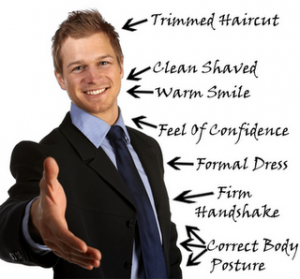
1. Dress about 10 percent better than you expect your client/customer to be dressed. Do not overdress or underdress. Both of these choices are considered disrespectful by clients.
2. People feel most comfortable when others seem to be like them in appearance, beliefs, or values. Predict the values and beliefs of your clients and customers and emulate or at least be aware of these factors so that you are prepared to make your best first impression.
3. You should be immaculate when you meet your client/customer. This means you should smell clean (not heavily cologned, as many men and women use far too much of the smelly stuff), have your hair trim and neat, and physically appear as good as you possibly can.
4. Find out what values are most important to a person in doing business with you and determine those values that are relevant to your product/service. “What is most important to you in possibly doing business with me?”
5. Ask your client how he knows when he has his values met. If he tells you fast service is his highest value, ask him, “How do you determine what fast service is?”
6. Ask your client: If you give him his highest value (fast service in this instance), will he work with you? If not, then what really is his highest value? (He’s holding back and you have not yet developed
a trusting rapport.)
7. Be certain that you know what your client needs your product/ service to do. Needs and values are often different from each other, and we aren’t interested in what your service could do for your customer but what it must do for your customer to be loyal to you. “If you had to pick one thing that our service/product must do for you, what would it be?”
8. Be certain to note the client’s speaking and listening pace (they are generally identical) and match them as closely as possible. Do not speak so fast that your client fails to process what you are saying
(if your client speaks slowly), and do not speak slowly if your client processes rapidly (clue: your client speaks rapidly) as you will bore him.
9. If you are nervous about your meeting for whatever reason, then your client probably is as well. Take advantage of the brain’s organization and keep your client to your right if possible when shaking hands, sitting, and communicating. This accesses more of the left brain for both you and your client and allows you both to relax and perform more analytically.
10. When meeting with women (regardless of whether you are male or female) you should try to keep your eye level below that of your counterpart. Research reveals that almost all women are more comfortable and less intimidated when their eye level is higher than those around them.
11. When clients are particularly emotional do not exceed their level of emotion as you model their behavior. Do allow yourself to be somewhat upset / concerned by the cause of their anger. “The city is making you pay an extra $20,000 for your license this year?
What is that about?!”
12. Be familiar with the terminology of the business/profession of your clients. Research reveals that using the exact same buzzwords and corporate lingo your customer does identifies you as an insider and makes your client more likely to say “yes” to you.
13. Show sincere interest and fascination with your client/customer, their interests, pursuits, and business. Nothing is as important in building rapport as an honest and caring interest in the person you are trying to influence.

Personal Improvement, Research & Reports
 What happens in our heads when we set goals?
Apparently a lot more than you’d think. Goal setting isn’t quite so simple as deciding on the things you’d like to accomplish and working towards them.
According to the research of psychologists, neurologists, and other scientists, setting a goal invests ourselves into the target as if we’d already accomplished it. That is, by setting something as a goal, however small or large, however near or far in the future, a part of our brain believes that desired outcome is an essential part of who we are – setting up the conditions that drive us to work towards the goals to fulfill the brain’s self-image.
Apparently the brain cannot distinguish between things we want and things we have. Neurologically, then, our brains treat the failure to achieve our goal the same way as it treats the loss of a valued possession. And up until the moment the goal is achieved, we have failed to achieve it, setting up a constant tension that the brain seeks to resolve.
Ideally, this tension is resolved by driving us towards accomplishment. In many cases, though, the brain simply responds to the loss, causing us to feel fear, anxiety, even anguish, depending on the value of the as-yet-unattained goal.
Love, Loss, Dopamine, and Our Dreams
 The brains functions are carried out by a stew of chemicals called neurotransmitters. You’ve probably heard of serotonin, which plays a key role in our emotional life – most of the effective anti-depressant medications on the market are serotonin reuptake inhibitors, meaning they regulate serotonin levels in the brain leading to more stable moods.
Somewhat less well-known is another neurotransmitter, dopamine. Among other things, dopamine acts as a motivator, creating a sensation of pleasure when the brain is stimulated by achievement. Dopamine is also involved in maintaining attention – some forms of ADHD are linked to irregular responses to dopamine.
So dopamine plays a key role in keeping us focused on our goals and motivating us to attain them, rewarding our attention and achievement by elevating our mood. That is, we feel good when we work towards our goals.
Dopamine is related to wanting – to desire. The attainment of the object of our desire releases dopamine into our brains and we feel good. Conversely, the frustration of our desires starves us of dopamine, causing anxiety and fear.
One of the greatest of desires is romantic love – the long-lasting, “till death do us part” kind. It’s no surprise, then, that romantic love is sustained, at least in part, through the constant flow of dopamine released in the presence – real or imagined – of our true love. Loss of romantic love cuts off that supply of dopamine, which is why it feels like you’re dying – your brain responds by triggering all sorts of anxiety-related responses.
Herein lies obsession, as we go to ever-increasing lengths in search of that dopamine reward. Stalking specialists warn against any kind of contact with a stalker, positive or negative, because any response at all triggers that reward mechanism. If you let the phone ring 50 times and finally pick up on the 51st ring to tell your stalker off, your stalker gets his or her reward, and learns that all s/he has to do is wait for the phone to ring 51 times.

Romantic love isn’t the only kind of desire that can create this kind of dopamine addiction, though – as Captain Ahab knew well, any suitably important goal can become an obsession once the mind has established ownership.
The Neurology of Ownership
Ownership turns out to be about a lot more than just legal rights. When we own something, we invest a part of ourselves into it – it becomes an extension of ourselves.
In a famous experiment at Cornell University, researchers gave students school logo coffee mugs, and then offered to trade them chocolate bars for the mugs. Very few were willing to make the trade, no matter how much they professed to like chocolate. Big deal, right? Maybe they just really liked those mugs!
But when they reversed the experiment, handing out chocolate and then offering to trade mugs for the candy, they found that now, few students were all that interested in the mugs. Apparently the key thing about the mugs or the chocolate wasn’t whether students valued whatever they had in their possession, but simply that they had it in their possession.
This phenomenon is called the “endowment effect”. In a nutshell, the endowment effect occurs when we take ownership of an object (or idea, or person); in becoming “ours” it becomes integrated with our sense of identity, making us reluctant to part with it (losing it is seen as a loss, which triggers that dopamine shut-off I discussed above).
Interestingly, researchers have found that the endowment effect doesn’t require actual ownership or even possession to come into play. In fact, it’s enough to have a reasonable expectation of future possession for us to start thinking of something as a part of us – as jilted lovers, gambling losers, and 7-year olds denied a toy at the store have all experienced.
The Upshot for Goal-Setters
So what does all this mean for would-be achievers?
On one hand, it’s a warning against setting unreasonable goals. The bigger the potential for positive growth a goal has, the more anxiety and stress your brain is going to create around it’s non-achievement.
It also suggests that the common wisdom to limit your goals to a small number of reasonable, attainable objectives is good advice. The more goals you have, the more ends your brain thinks it “owns” and therefore the more grief and fear the absence of those ends is going to cause you.
On a more positive note, the fact that the brain rewards our attentiveness by releasing dopamine means that our brain is working with us to direct us to achievement. Paying attention to your goals feels good, encouraging us to spend more time doing it. This may be why outcome visualization — a favorite technique of self-help gurus involving imagining yourself having completed your objectives — has such a poor track record in clinical studies. It effectively tricks our brain into rewarding us for achieving our goals even though we haven’t done it yet!
But ultimately our brain wants us to achieve our goals, so that it’s sense of who we are can be fulfilled. And that’s pretty good news!