Personal Improvement
 Organizations now days have a lot more problems and structures are become more complex as the world has become a global village. The cultural and ethnic diversity within companies and developed human behavior is sometimes hindering the organizational goals and vision. Younger individuals tend to produce more results than the elder ones – as elders depend on their stereotyped thinking and lack in learning new things. Where as younger people are always enthusiastic in completing their work and trying to achieve more.
All individuals have a number of basic needs which can be thought as outlets that channel and regulate the flow of potential energy from the reservoir. Most individuals have, within a given socio-cultural system, a similar set of motives or energy outlets; but differ greatly in the relative strength or readiness of various motives and actualization of motives depends on specific situations in which a person finds himself or herself.
Researchers have identified several factors leading to job satisfaction which are broadly divided into two categories, namely, Organizational Factors and Individual Determinants.
- Reward System: The organizational reward system has been found to be related to job satisfaction. This pertains to how fairly pay benefits and promotions are distributed.
- Work: The nature of work contributes heavily. The factors such as flexibility, freedom and discretion available in the performance of one’s job bring a lot of job satisfaction.
- Supervisory Behavior: Satisfaction tends to be higher when employees believe that their supervisor is competent and considerate.
- Working Conditions: Overall working conditions in an organization have a direct bearing on the level of satisfaction. Comfort, salary, challenge and resource availability are main components of working conditions.
- Various individual and socio-economic variables are linked to job satisfaction. Researchers have found that younger people are more satisfied. Similarly men are more influenced than women if they are provided more autonomy in their work (Malini 2001).
- There is a direct link between job satisfaction and performance of an employee. A satisfied worker makes extra efforts leading to better performance in his or her work. There is higher outcome in an organization if employees are more satisfied. Similarly it leads to decrease in absenteeism if employees are more satisfied in their jobs. It also leads to creativity among employees and better mental health.

Some Tips for Effective Recognition
You need to establish criteria for what performance or contribution constitutes behavior or actions worthy of reward.
- All employees must be eligible for recognition.
- The recognition must supply the employer and employee with specific information about what behaviors or actions are being rewarded and recognized.
- Anyone who then performs at the level or standard stated in the criteria receives the reward.
- The recognition should occur as close to the performance of the actions as possible, so the recognition reinforces behavior the employer wants to encourage.
- You don’t want to design a process in which managers “select” people to receive recognition. This type of process will be viewed forever as “favoritism” or talked about as “it’s your turn to get recognized this month.” This is why processes that single out an individual, such as “Employee of the Month,” are rarely effective.

Personal Improvement
 Life offers many tough challenges and perhaps one of the toughest is to stay motivated.
Many times, even the most motivated of us tend to slack somewhere.
So how do you stay motivated forever without giving yourself that excuse to not do so?
Here are five effective ways that will help you stay motivated forever.
1. Visualize your Goal
It begins with the understanding of what you really want.
Once that item is taken care of, it is important to visualize the ultimate goal that you are trying to achieve.
When you create a vision of the thing that you aim to achieve, it creates a powerful gravitating force that makes you want to strive for. This vision leads to an inspiration, which in turn propels you to keep yourself motivated.
For example, if weight loss is your goal, see a healthier, slimmer you in that outfit you always wanted to fit into.
No matter what your goal, this works like magic.
2. Postpone Laziness
Procrastination or laziness is a major inhibitor for motivation.
Every time you put something off for later, you move one step down from your goal. Therefore, it is important to stop making excuses and go for it.
If you are preparing for an examination that could change your life for better and you don’t feel like picking up that book to study, postpone that thought; and get started.
Every time that you think of postponing a task in hand that will help you achieve your goal, postpone your excuses/laziness instead of postponing the actual task.
The bottom line: The time is now!
3. Positive In, Negative Out
 Negativity in any form hampers your approach towards goals.
The mind allows negativity to seep in quite often; it is important to eliminate these negative thoughts to keep you motivated.
Think of all the negative thoughts that cross your mind: some common ones are, “I never knew this task could be so tough, Oh I can’t do this, I don’t think I am cut out for this.”
Instead replace these thoughts with “I can do it, If he/she can, so can I, This is what I have wanted to do always, now is the time.”
Positive thoughts can significantly impact the way you deal with the task at hand, which eventually yields desirable results.
Always approach your goal/task with a “can do” attitude; this is a certain way to keep yourself motivated for tougher challenges.
Besides positive thoughts, it is also essential to avoid negative people who can do or say things to bring your motivation levels down.
Criticism and compliments are both important components of staying motivated.
However, with positive people you are sure to get less criticism and more support, which plays a pivotal role in keeping you even more motivated.
4. One Day at a Time
While a long-term vision to your goal is crucial, it is equally important to take small steps.
Set yourself small milestones that finally lead to your main goal.
By taking these baby steps, you enjoy small successes that help you stay motivated.
After a few days/months, you will start to notice that you have progressed well, and want to keep going for more.
5. Don’t Give Up
 You can’t control all things about your life.
If you experience a little lull in your motivation levels, don’t give up.
You still have the big goal that still remains to be achieved.
If you experience a slowdown, don’t let it get to you.
It is probably just one of those days when you are really not up to it.
Take it easy; however, don’t lose sight of the long-term goal and how badly you need to achieve it.
Motivation, like learning, never ceases and is a lot of hard work.
With a little effort and a never-give-up-attitude, you are going to keep your motivation levels at an all-time high.

Personal Improvement
 Some people are naturally positive and optimistic, whereas others tend to see the world in a more negative light and always think the glass is half-empty. Therefore, it is only natural that some people tend to complain more than others do. However, complaining is not always related to how pessimistic or unhappy a person is. Most of us have things we complain about, yet there are some people that seem to complain about everything.
Just because someone complains a lot, does not necessarily mean they are unhappy. Obviously, there is some connection between what happens in someone’s life and the things that they complain about. When a lot of bad events occur, one is more likely to complain than when everything is rosy. Some people though, seem to complain a lot regardless of life’s circumstances. We all know of people who are always complaining and never seem to stop.
There are different reasons why people complain. For some people, complaining comes forth out of a true sense of unhappiness. They are unhappy about themselves or about their lives and they express this by complaining to others about their bad fortune. When people are that unhappy it does not really matter what happens in their lives, because they will always find something to complain about. They need to complain, because for them it is a way of coping with their unhappiness that they have learned is effective.
This is different to the every day complaining most people do. We all complain sometimes, about little things that happen to us, like being stuck in a traffic jam or being turned down for a job. However, because most of us are not truly unhappy we do not have the need to complain all the time. When no bad events take place in our lives, we simply cease to complain. This is not the case with so-called compulsive complainers.
People do not only complain incessantly because they are unhappy, for some complainers it is more of a  bad habit that they have picked up. These are the kind of people who either just need to complain for no good reason, or they are so used to complaining all the time that they do not even notice that they are doing it. You can recognize them by their casual way of complaining. They might walk into your house and mention that traffic was a nightmare, the weather sucks, they are not feeling too well and that something in your house smells funny.
A final reason why some people complain a lot is because it makes them feel better. These people are not necessarily unhappy people, but by complaining about every little thing that bothers them, they actually feel better. In other words, they burden other people with all their problems and worries, making those people feel bad, while they in turn end up feeling great. There is nothing wrong with complaining, we all need to do it now and again, but the trick is to not over do it. The last thing you want is to end up being known as one of those people who complains about everything.

Personal Improvement
“A man is but the product of his thoughts. 
What he thinks, he becomes.”
Mahatma Gandhi
“Positive thinking will let you do everything better
than negative thinking will.”
Zig Ziglar – Personal development guru
These are two powerful quotes. Combined, they tell us that if we think positively, we’re likely to enjoy positive results. Negative thinking, on the other hand, can lead to outcomes we don’t want.
Positive and negative thoughts can become self-fulfilling prophecies: What we expect can often come true.
If you start off thinking you will mess up a task, the chances are that you will: You may not try hard enough to succeed, you won’t attract support from other people, and you may not perceive any results as good enough.
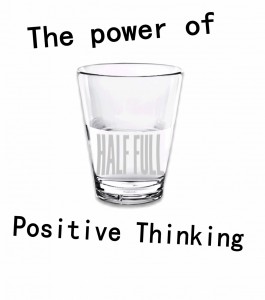 Positive thinking, on the other hand, is often associated with positive actions and outcomes. You’re drawn to, and you focus on, the positive aspects of a situation. You have hope and faith in yourself and others, and you work and invest hard to prove that your optimism is warranted. You’ll enthuse others, and they may well “pitch in” to help you. This makes constructive outcomes all the more likely.
When it comes down to it, positive, optimistic people are happier and healthier, and enjoy more success than those who think negatively. The key difference between them is how they think about and interpret the events in their life.