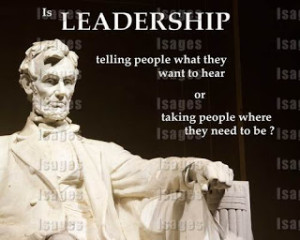
By learning about the pros and cons of each style, you can adapt your approach to your situation.
Adapting Your Approach to Leadership
In business, a leadership style called “transformational leadership” is often the most effective approach to use. Transformational leaders have integrity, they inspire people with a shared vision of the future, they set clear goals, they motivate people towards these goals, they manage delivery, and they communicate well with their teams. (You can find out more about transformational leadership at the end of this article.)
However, leadership is not “one size fits all” thing; often, you must adapt your style to fit a situation or a specific group. This is why it’s useful to gain a thorough understanding of other leadership styles; after all, the more approaches you’re familiar with, the more you can shape your approach to the situation.
Let’s take a look at some of the leadership styles that you can use. (For ease of reference, these are shown in alphabetical order.)
 1. Autocratic Leadership
Autocratic leadership is an extreme form of transactional leadership, where leaders have a lot of power over their people. Staff and team members have little opportunity to make suggestions, even if these would be in the team’s or the organization’s best interest.
The benefit of autocratic leadership is that it’s incredibly efficient. Decisions are made quickly, and work gets done efficiently.
The downside is that most people resent being treated this way. Therefore, autocratic leadership can often lead to high levels of absenteeism and high staff turnover. However, the style can be effective for some routine and unskilled jobs: in these situations, the advantages of control may outweigh the disadvantages.
Autocratic leadership is often best used in crises, when decisions must be made quickly and without dissent. For instance, the military often uses an autocratic leadership style; top commanders are responsible for quickly making complex decisions, which allows troops to focus their attention and energy on performing their allotted tasks and missions.
2. Bureaucratic Leadership
Bureaucratic leaders work “by the book.” They follow rules rigorously, and ensure that their people follow procedures precisely.
This is an appropriate leadership style for work involving serious safety risks (such as working with machinery, with toxic substances, or at dangerous heights) or where large sums of money are involved. Bureaucratic leadership is also useful in organizations where employees do routine tasks (as in manufacturing).
The downside of this leadership style is that it’s ineffective in teams and organizations that rely on flexibility, creativity, or innovation.
Much of the time, bureaucratic leaders achieve their position because of their ability to conform to and uphold rules, not because of their qualifications or expertise. This can cause resentment when team members don’t value their expertise or advice.
3. Charismatic Leadership
A charismatic leadership style can resemble transformational leadership because these leaders inspire enthusiasm in their teams and are energetic in motivating others to move forward. This ability to create excitement and commitment is an enormous benefit.
The difference between charismatic leaders and transformational leaders lies in their intention. Transformational leaders want to transform their teams and organizations. Charismatic leaders are often focused on themselves, and may not want to change anything.
The downside to charismatic leaders is that they can believe more in themselves than in their teams. This can create the risk that a project or even an entire organization might collapse if the leader leaves. A charismatic leader might believe that she can do no wrong, even when others are warning her about the path she’s on; and this feeling of invincibility can ruin a team or an organization.
Also, in the followers’ eyes, success is directly connected to the presence of the charismatic leader. As such, charismatic leadership carries great responsibility, and it needs a long-term commitment from the leader.
4. Democratic/Participative Leadership
Democratic leaders make the final decisions, but they include team members in the decision-making process. They encourage creativity, and team members are often highly engaged in projects and decisions.
There are many benefits of democratic leadership. Team members tend to have high job satisfaction and are productive because they’re more involved in decisions. This style also helps develop people’s skills. Team members feel in control of their destiny, so they’re motivated to work hard by more than just a financial reward.
Because participation takes time, this approach can slow decision-making, but the result is often good. The approach can be most suitable when working as a team is essential, and when quality is more important than efficiency or productivity.
The downside of democratic leadership is that it can often hinder situations where speed or efficiency is essential. For instance, during a crisis, a team can waste valuable time gathering people’s input. Another downside is that some team members might not have the knowledge or expertise to provide high quality input.
5. Laissez-Faire Leadership
This French phrase means “leave it be,” and it describes leaders who allow their people to work on their own. This type of leadership can also occur naturally, when managers don’t have sufficient control over their work and their people.
Laissez-faire leaders may give their teams complete freedom to do their work and set their own deadlines. They provide team support with resources and advice, if needed, but otherwise don’t get involved.
This leadership style can be effective if the leader monitors performance and gives feedback to team members regularly. It is most likely to be effective when individual team members are experienced, skilled, self-starters.
The main benefit of laissez-faire leadership is that giving team members so much autonomy can lead to high job satisfaction and increased productivity.
The downside is that it can be damaging if team members don’t manage their time well or if they don’t have the knowledge, skills, or motivation to do their work effectively.
6. People-Oriented/Relations-Oriented Leadership
With people-oriented leadership, leaders are totally focused on organizing, supporting, and developing the people on their teams. This is a participatory style and tends to encourage good teamwork and creative collaboration. This is the opposite of task-oriented leadership.
People-oriented leaders treat everyone on the team equally. They’re friendly and approachable, they pay attention to the welfare of everyone in the group, and they make themselves available whenever team members need help or advice.
The benefit of this leadership style is that people-oriented leaders create teams that everyone wants to be part of. Team members are often more productive and willing to take risks, because they know that the leader will provide support if they need it.
The downside is that some leaders can take this approach too far; they may put the development of their team above tasks or project directives.
7. Servant Leadership
This term, created by Robert Greenleaf in the 1970s, describes a leader often not formally recognized as such. When someone at any level within an organization leads simply by meeting the needs of the team, he or she can be described as a “servant leader.”
Servant leaders often lead by example. They have high integrity and lead with generosity.
In many ways, servant leadership is a form of democratic leadership because the whole team tends to be involved in decision making. However, servant leaders often “lead from behind,” preferring to stay out of the limelight and letting their team accept recognition for their hard work.
Supporters of the servant leadership model suggest that it’s a good way to move ahead in a world where values are increasingly important, and where servant leaders can achieve power because of their values, ideals, and ethics. This is an approach that can help to create a positive corporate culture and can lead to high morale among team members.
However, other people believe that in competitive leadership situations, people who practice servant leadership can find themselves left behind by leaders using other leadership styles. This leadership style also takes time to apply correctly: it’s ill-suited in situations where you have to make quick decisions or meet tight deadlines.
Although you can use servant leadership in many situations, it’s often most practical in politics, or in positions where leaders are elected to serve a team, committee, organization, or community.
8. Task-Oriented Leadership
Task-oriented leaders focus only on getting the job done and can be autocratic. They actively define the work and the roles required, put structures in place, and plan, organize, and monitor work. These leaders also perform other key tasks, such as creating and maintaining standards for performance.
The benefit of task-oriented leadership is that it ensures that deadlines are met, and it’s especially useful for team members who don’t manage their time well.
However, because task-oriented leaders don’t tend to think much about their team’s well-being, this approach can suffer many of the flaws of autocratic leadership, including causing motivation and retention problems.
9. Transactional Leadership
This leadership style starts with the idea that team members agree to obey their leader when they accept a job. The “transaction” usually involves the organization paying team members in return for their effort and compliance. The leader has a right to “punish” team members if their work doesn’t meet an appropriate standard.
Although this might sound controlling and paternalistic, transactional leadership offers some benefits. For one, this leadership style clarifies everyone’s roles and responsibilities. Another benefit is that, because transactional leadership judges team members on performance, people who are ambitious or who are motivated by external rewards – including compensation – often thrive.
The downside of this leadership style is that team members can do little to improve their job satisfaction. It can feel stifling, and it can lead to high staff turnover.
Transactional leadership is really a type of management, not a true leadership style, because the focus is on short-term tasks. It has serious limitations for knowledge-based or creative work. However, it can be effective in other situations.
10. Transformational Leadership
As we discussed earlier in this article, transformation leadership is often the best leadership style to use in business situations.
Transformational leaders are inspiring because they expect the best from everyone on their team as well as themselves. This leads to high productivity and engagement from everyone in their team.
The downside of transformational leadership is that while the leader’s enthusiasm is passed onto the team, he or she can need to be supported by “detail people.”
That’s why, in many organizations, both transactional and transformational leadership styles are useful. Transactional leaders (or managers) ensure that routine work is done reliably, while transformational leaders look after initiatives that add new value.
It’s also important to use other leadership styles when necessary – this will depend on the people you’re leading and the situation that you’re in.



 Every morning when I drive to work, I make it a point to notice the expression on the faces of other people. Most of them have an expression which tells me that they would rather do something else than go to their workplace. This feeling or attitude stems from the basic fact that many employees are not happy in the workplace.
 In business, transformational leadership is often the best leadership style to use. However, no one style of leadership fits all situations, so it helps to have an understanding of other styles.