Checklist Culture: The Secret Weapon of High-Performing IT Departments

Checklist Culture: The Secret Weapon of High-Performing IT Departments

Checklist Culture: The Secret Weapon of High-Performing IT Departments

In high-performing IT departments, success is rarely accidental. It’s built on systems, discipline, and consistency—and one of the most powerful tools behind it all is something surprisingly simple: checklists.

From system updates to security audits, checklists ensure that nothing gets missed, even in the most complex environments. Whether you’re managing a school system, a retail POS, or enterprise infrastructure, adopting a checklist culture can dramatically improve performance and reliability.

What is Checklist Culture?

Checklist culture means embedding structured, repeatable checklists into every critical IT process. Instead of relying on memory or informal routines, teams follow documented steps to complete tasks accurately and consistently.

Why Checklists Matter in IT

  • Reduce Human Error: Even experienced IT professionals can forget steps—checklists eliminate that risk.
  • Ensure Consistency: Every task is performed the same way, every time.
  • Improve Accountability: Clear steps make it easier to track responsibility and performance.
  • Speed Up Training: New team members can quickly learn processes using documented checklists.

Key Areas Where Checklists Are Essential

1. System Updates and Maintenance

Ensure all updates are applied correctly without disrupting operations. A checklist might include:

  • Backup system before update
  • Verify compatibility
  • Apply updates
  • Test functionality

2. Security Audits

Cybersecurity requires strict routines. Use checklists to:

  • Review access permissions
  • Scan for vulnerabilities
  • Update antivirus definitions
  • Monitor unusual activity

3. User Onboarding and Offboarding

Managing user access is critical in schools and businesses:

  • Create or disable accounts
  • Assign roles and permissions
  • Set up email and system access
  • Revoke access when needed

4. Backup and Recovery

Data protection depends on consistency:

  • Schedule regular backups
  • Verify backup integrity
  • Test recovery process

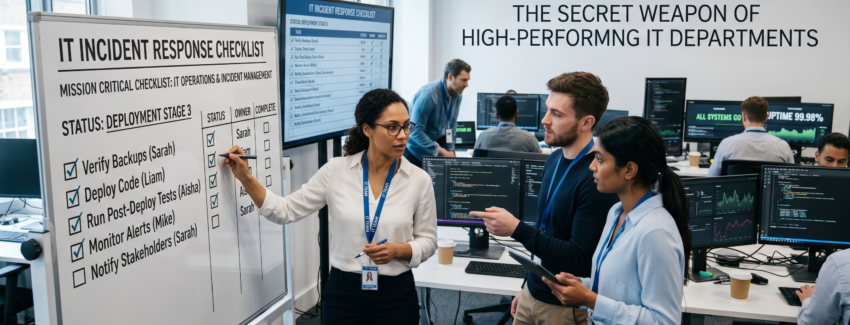
5. Incident Response

When systems fail, checklists ensure fast and structured recovery:

  • Identify the issue
  • Isolate affected systems
  • Notify stakeholders
  • Document resolution steps

How to Build a Checklist Culture

  • Start Simple: Begin with your most critical processes.
  • Document Everything: Write clear, step-by-step instructions.
  • Use Digital Tools: Implement checklists in your management systems.
  • Review Regularly: Update checklists as systems evolve.

Conclusion

Checklist culture transforms IT departments from reactive to proactive. It minimizes risk, improves efficiency, and ensures that your systems run smoothly every day.

If your organization is still relying on memory or informal processes, now is the time to change. A simple checklist today can prevent major failures tomorrow.

Cybersecurity Basics Every School and SME Must Implement Today

Cybersecurity Basics Every School and SME Must Implement Today

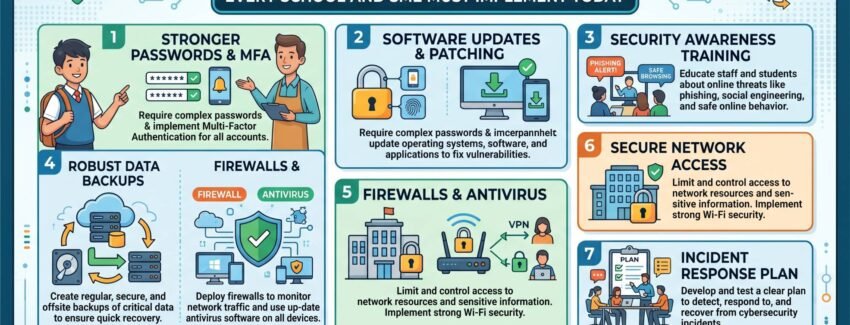
In today’s digital world, cybersecurity is no longer optional—it’s a necessity. Schools and small-to-medium businesses (SMEs) are increasingly becoming targets for cyberattacks due to limited security infrastructure and lack of awareness.

The good news? You don’t need a massive budget or a full IT department to protect your organization. By implementing a few essential cybersecurity practices, you can significantly reduce your risk.

1. Use Strong Password Policies

Weak passwords are one of the easiest ways for hackers to gain access to your systems. Ensure that all users:

  • Use complex passwords (mix of letters, numbers, symbols)
  • Avoid reusing passwords across systems
  • Change passwords regularly

2. Enable Two-Factor Authentication (2FA)

Even if a password is compromised, two-factor authentication adds an extra layer of security. This could be a one-time code sent to a mobile device or email.

3. Keep Software and Systems Updated

Outdated systems are highly vulnerable to attacks. Regularly update:

  • Operating systems
  • School management or POS software
  • Plugins and extensions

4. Backup Your Data Regularly

Data loss due to ransomware or system failure can be devastating. Ensure that you:

  • Perform daily or weekly backups
  • Store backups securely (cloud + offline)
  • Test backup recovery periodically

5. Train Staff and Employees

Human error is one of the biggest cybersecurity risks. Conduct basic training to help staff:

  • Identify phishing emails
  • Avoid suspicious downloads
  • Follow secure data handling practices

6. Install Antivirus and Firewall Protection

Every device connected to your network should have proper antivirus software and firewall protection to block malicious activities.

7. Limit Access to Sensitive Information

Not every employee needs access to all data. Use role-based access control to ensure that users only access what they need.

8. Secure Your Network

Ensure your Wi-Fi networks are protected:

  • Use strong encryption (WPA3 or WPA2)
  • Change default router credentials
  • Hide or segment internal networks

9. Monitor and Audit Systems

Regularly review system logs and monitor unusual activities. Early detection can prevent major damage.

Conclusion

Cybersecurity doesn’t have to be complicated or expensive. By taking these simple steps, schools and SMEs can build a strong defense against common cyber threats.

If you’re unsure where to start, working with an IT consultant can help you assess your risks and implement the right solutions tailored to your organization.

Verification: 1544cdbd1105873e