|
Getting your Trinity Audio player ready...
|
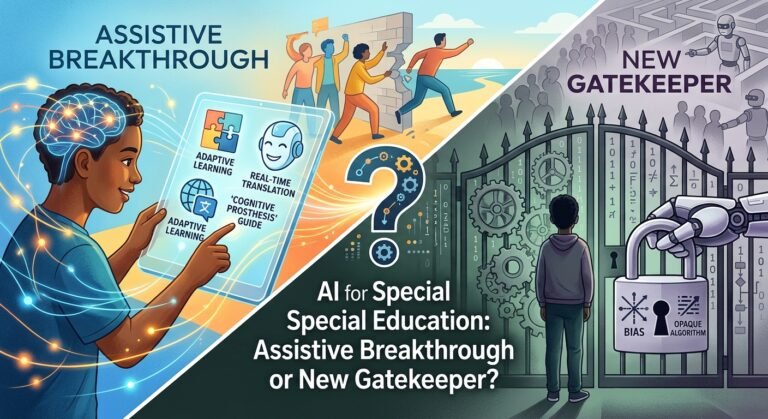
In many international and bilingual schools, including across the GCC, a single classroom can hold students who think in Arabic, Urdu, Tagalog, Hindi, French and English. Real-time AI translation tools in the classroom promise to remove language as a barrier to content. A student new to English can read the science text in their first language, ask questions in it and still keep up. That is a genuine breakthrough for inclusion. It also raises a hard question: if translation is instant, when does the student learn the language of instruction?
The Inclusion Case
For decades, newcomer students have spent months understanding very little of their lessons while their English caught up. During that time, they fell behind in content, lost confidence and were often placed in lower sets. AI translation allows content learning to continue from day one. It also supports translanguaging, the practice of using all of a learner’s languages to make meaning, which research has long associated with deeper understanding.
The Language Acquisition Risk
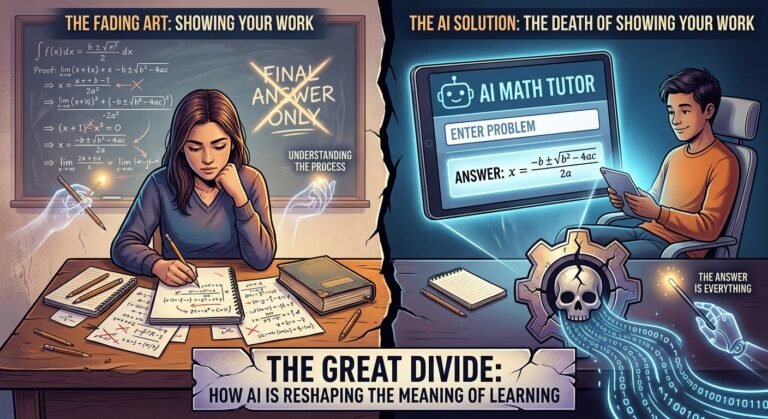
Language is acquired through effortful exposure and use. If a student always reads the translated version and always writes in their first language before translating, the productive struggle that builds academic English, or academic Arabic, never happens. The tool solves today’s comprehension problem by postponing tomorrow’s language problem.
There is also an accuracy issue. Machine translation handles everyday language well but can distort subject-specific vocabulary, idioms and nuance. A mistranslated science term can create a misconception that persists for years.
The Equity Dimension
Translation quality is uneven across languages. Widely used languages are translated well; less-resourced languages and dialects are not. Students who speak those languages receive worse support while appearing to be “included.” Schools should test tools in the actual languages their students speak, not assume quality from a demo in Spanish or French.
A Gradual Release Model
- Arrival phase: full translation support for content, plus daily targeted language instruction.
- Bridging phase: bilingual texts side by side; students read in the target language first, then check.
- Independence phase: translation for key vocabulary only; production in the target language.
- Review: language specialists set the phase for each student every term.
The principle is that translation should be a ramp, not a permanent wheelchair. Its use should decrease by design.
Guidance for Teachers
- Pre-teach subject vocabulary and check how the tool translates it.
- Allow first-language thinking and discussion, but require some output in the language of instruction.
- Value multilingualism publicly; a student’s first language is an asset, not a deficit.
Frequently Asked Questions
Should students use AI translation in class?
Yes, as temporary support for newcomers, combined with a plan that gradually reduces reliance as language skills grow.
Does AI translation slow language learning?
It can if students use it for everything. Structured, decreasing use supports both content learning and language acquisition.
How accurate is AI translation for subject vocabulary?
It is usually good for common languages and everyday terms but less reliable for technical vocabulary and less widely spoken languages, so teachers should check key terms.