
The headline that should worry every educator On 15 November 2026, the person who came first in South Korea’s national tax accountant qualification exam went on camera and confessed. Appearing in a video on his lawyer’s YouTube channel with his face concealed by a mask, Han Won Seok confessed to using a miniature camera to […]

EdTech & Digital Learning
LMS, SIS, educational platforms, classroom technology, school technology strategy and digital learning.
VR in education has been hyped for a decade. Here is where virtual and augmented reality genuinely improve learning, where they do not, and how to invest wisely.
Immersive Learning in 2026: Where VR and AR Actually Earn Their Place Read Post »
Points, streaks and leaderboards boost activity, but can they undermine real motivation? An honest look at gamification in education and how to use it well.
Gamification After the Hype: What Points and Badges Really Do to Motivation Read Post »
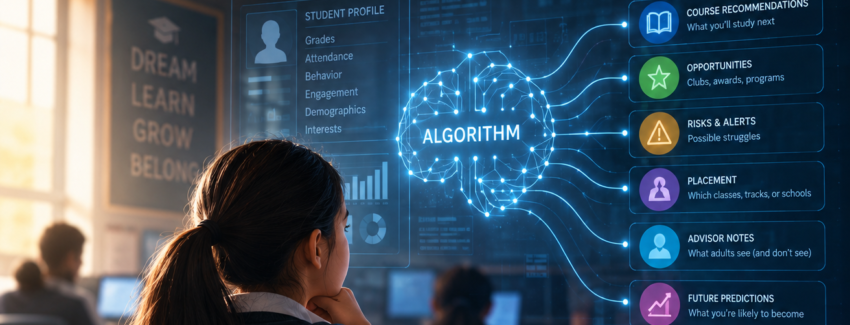
Predictive analytics can spot students at risk before they fail, or label them for life. How schools and universities can use early warning systems responsibly.
Adaptive platforms and AI tutors decide what each student sees next, often without anyone reviewing the sequence. How leaders can audit it.
The Invisible Curriculum: What Algorithms Decide Students Never See Read Post »
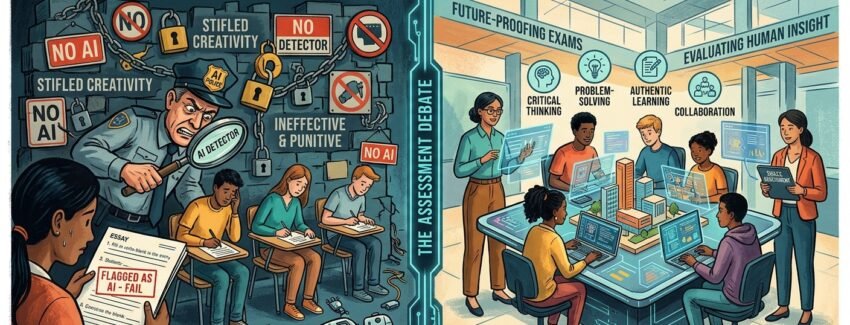
Schools are dropping AI detectors, but few are changing what they assess. Practical redesign options and their equity trade-offs.
Assessment After AI: Why Banning Detectors Is Not the Same as Redesigning Exams Read Post »
Schools budget for buying EdTech but not for leaving it. Hidden exit costs in data, content and contracts, plus a pre-signing checklist.
The Vendor Lock-In Nobody Budgets For: Exit Costs in School EdTech Contracts Read Post »
Teachers bring in unvetted apps because official tools fall short. Why the shadow stack grows, the data risks, and a governance response that works.
The Shadow EdTech Stack: Free Tools Teachers Adopt Because the Official Ones Fail Read Post »
Prompt tutorials expire in months. The durable AI skills are verifying output, spotting confident errors and knowing when not to use AI.
AI Literacy Is Not Prompt Training: What Schools Should Actually Teach Read Post »
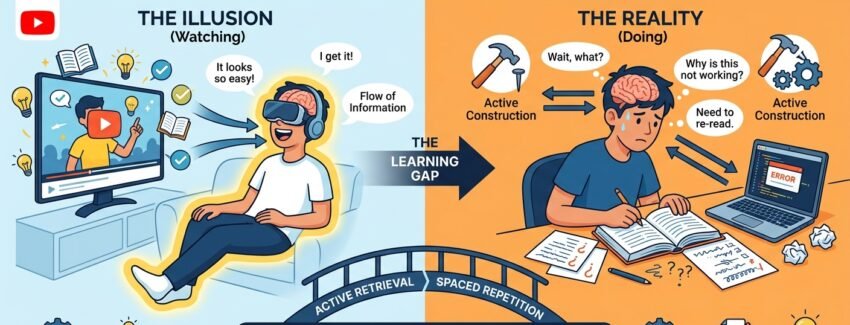
Clear videos and AI summaries create a sense of understanding without durable knowledge. How to design tasks that turn watching into learning.
The YouTube Illusion: Why Watching an Explanation Feels Like Learning Read Post »
Sharjah just published an AI ethics framework for schools. See how the UAE, Saudi Arabia, China, EU, US, UK, Singapore and India regulate AI in education.
When explanations are free, the teacher’s role shifts to curation, sequencing, diagnosis, feedback and habit-building. What schools need to change.
From Content Delivery to Learning Design: What Teachers Are For When Knowledge Is Free Read Post »