|
Getting your Trinity Audio player ready...
|
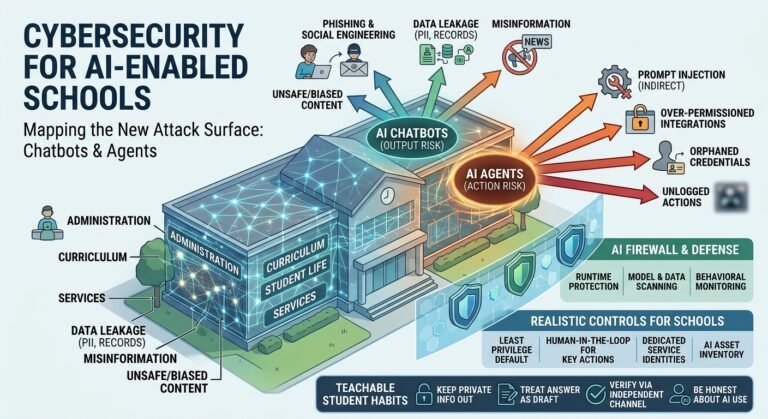
Before generative AI, protecting student data privacy meant securing the student information system, the LMS and email. Those boundaries no longer hold. Every time a teacher pastes a student’s essay into a chatbot, uploads a report to summarise or asks an AI to draft a behaviour note, student data leaves the institution, often to a consumer service with its own terms. Most of these leaks are well-intentioned. Almost none are logged.
The New Leak Points
- Prompts: names, grades, behaviour details and health information typed into AI tools.
- Uploads: spreadsheets of results, IEPs and safeguarding notes uploaded for analysis.
- Personal accounts: staff using free personal AI accounts rather than institution-managed ones.
- Browser extensions: AI helpers that read every page a teacher opens, including the SIS.
- Integrations: AI features connected to email, drives and LMS with broad permissions.
Why Policy Alone Fails
Most schools respond with a policy line: “Do not enter personal data into AI tools.” Without an approved alternative, teachers ignore it, because the time savings are real. Privacy protection works when the safe path is also the easy path.
What to Lock Down
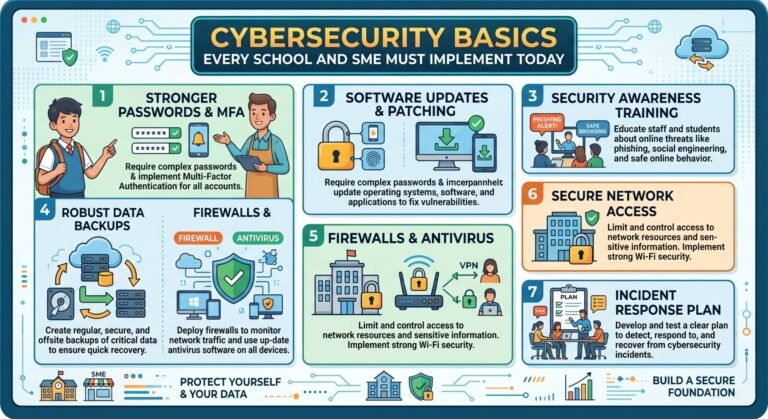
- Provide approved, institution-managed AI. Enterprise or education accounts with contractual no-training clauses and data processing terms.
- Classify data. Define which data can be used with which tools: public, internal, confidential, restricted.
- Control extensions. Manage browser extensions on school devices through your MDM.
- Review integrations. Audit which AI apps have OAuth access to school accounts and revoke unnecessary ones.
- Anonymise by habit. Teach staff to replace names with initials or codes before using AI.
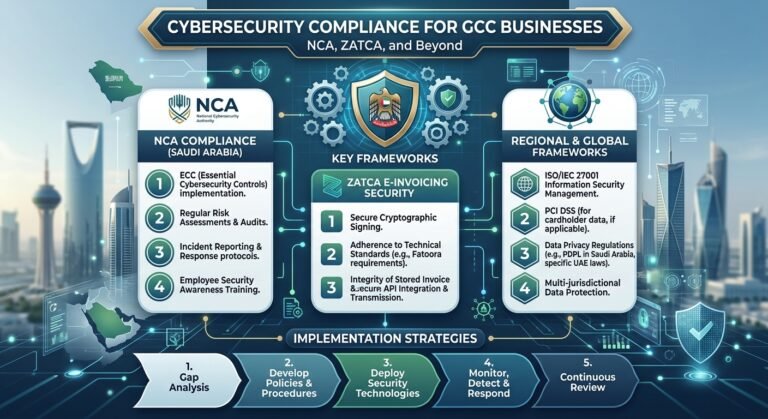
- Know your law. In Saudi Arabia, the Personal Data Protection Law and national cybersecurity controls apply; other jurisdictions have their own. Cross-border transfer rules matter when AI processing happens overseas.
The Equity Dimension
The students with the most sensitive records, those with additional needs, safeguarding concerns or health conditions, are also the students whose information teachers most want help writing about. They therefore face the highest exposure. Restricted data should have the strictest rules and the best approved tools.
A Quick Staff Rule
“If you would not email it to a stranger, do not paste it into an unapproved AI tool.” Simple rules survive busy days.
Frequently Asked Questions
Can teachers use ChatGPT or other AI with student data?
Only with institution-approved accounts that have proper data protection terms, and preferably with anonymised data.
What student data should never go into AI tools?
Health information, safeguarding notes, special needs records, identification numbers and anything classified as restricted by the school.
How can schools reduce AI data leaks?
Provide approved AI tools, classify data, manage browser extensions, audit app integrations and train staff to anonymise.