|
Getting your Trinity Audio player ready...
|
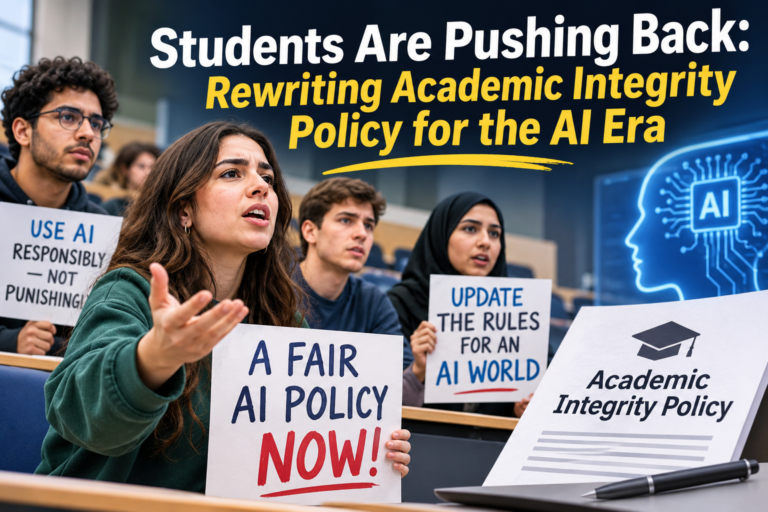
Universities moved through three phases with generative AI. First came alarm and bans. Then came permissive “use it responsibly” statements. Now, in 2026, the serious work has started: redesigning courses, programmers and support services on the assumption that every student has a capable AI assistant. AI in higher education is no longer a policy question; it is a design question.
What Is Changing
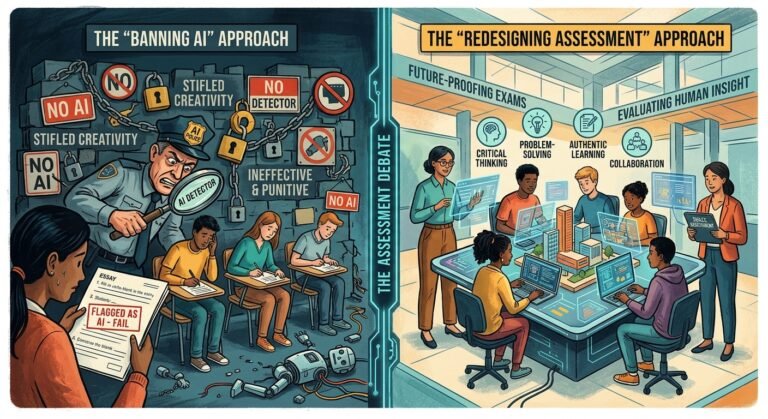
- Assessment: more in-person exams, oral defences, process portfolios and authentic, applied projects.
- Curriculum: AI use is being taught within disciplines, not only in generic literacy modules: how lawyers verify AI research, how engineers validate AI code, how historians test AI claims.
- Student support: AI agents handle advising questions, deadline reminders and early alerts for students at risk of dropping out.
- Operations: admissions, document verification and administrative tasks are being automated.
The Mechanism: Disciplinary Judgement Becomes the Product
When AI can produce competent essays, code and analyses, a degree’s value shifts toward the judgement a graduate brings: knowing when an output is wrong, what question to ask and what standards apply in the field. Courses that still assess routine production are certifying skills the market no longer pays for.
The Faculty Problem
Redesign depends on faculty, who are often rewarded for research rather than teaching innovation. Without time, support and recognition, course redesign happens unevenly, and students experience contradictory rules from module to module. Institutions that succeed provide instructional design support, shared assessment templates and clear programme-level policies.
The Equity Dimension
Students arrive with very different AI experience and access. Part-time, working and first-generation students may lack premium tools or the time to learn them. Universities that provide institution-wide access and explicit instruction narrow this gap; those that leave it to students widen it. AI early-warning systems also need scrutiny so that flags lead to support, not labelling.
A Programme-Level Approach
- Map where each programme develops and assesses core skills without AI.
- Define where AI use is expected, permitted and prohibited, consistently across modules.
- Provide institution-managed AI access to all students and staff.
- Invest in faculty development tied to real course redesign, not one-off workshops.
- Evaluate outcomes, including retention and graduate employment, by student group.
Frequently Asked Questions
How are universities using AI in 2026?
For course redesign, authentic assessment, AI-supported advising, early alerts for at-risk students and administrative automation.
Are universities banning AI?
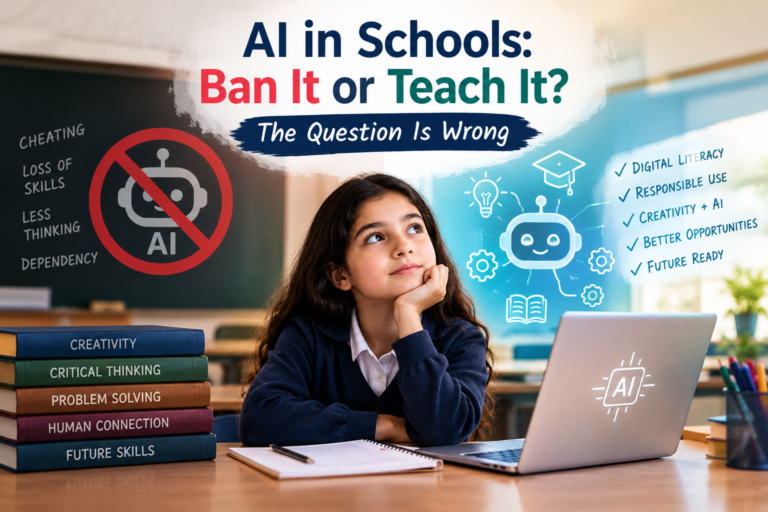
Most have moved away from bans toward defined, course-level rules on where AI is expected, permitted or prohibited.
What skills should university graduates have in the AI era?
Disciplinary judgement, verification of AI output, problem framing, communication and ethical reasoning.