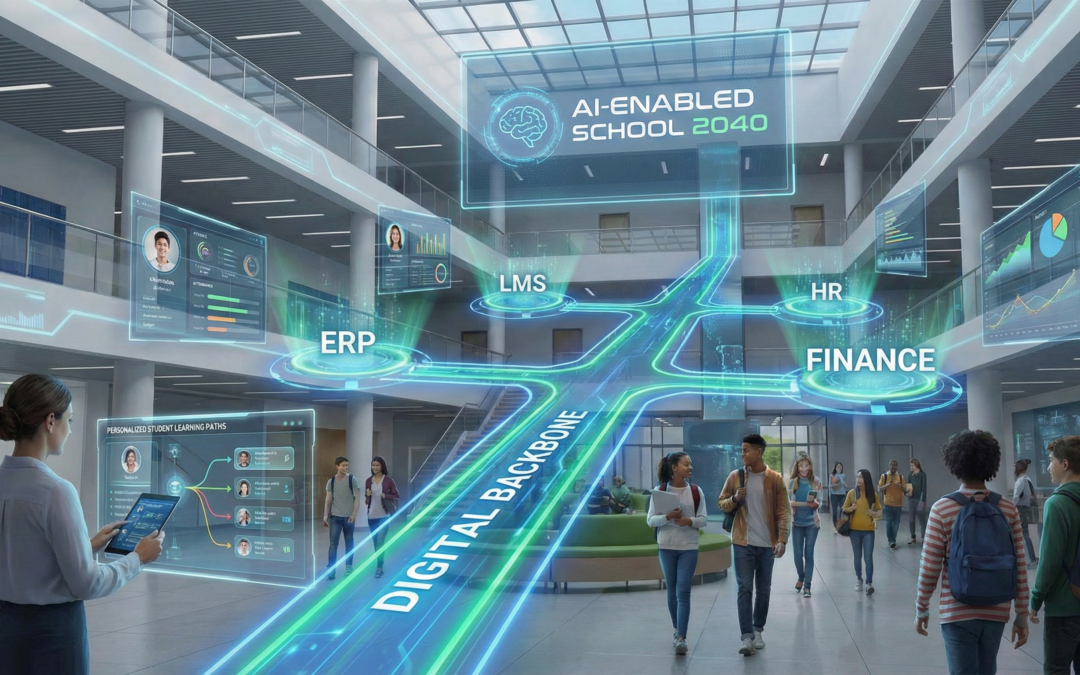
Artificial intelligence is only as powerful as the foundation it sits upon. In education, that foundation is a unified digital ecosystem—one where Enterprise Resource Planning (ERP), Learning Management Systems (LMS), Human Resources, and Finance modules don’t just coexist, but communicate seamlessly.
Why Fragmentation Fails AI
Many schools today operate with disconnected systems: one platform for student records, another for finance, a third for learning content, and spreadsheets filling the gaps. This fragmentation creates data silos that render AI implementation impossible. AI algorithms require comprehensive, real-time data to identify patterns, predict outcomes, and generate insights. When information is trapped in isolated systems, even the most sophisticated AI tools become ineffective.
The Power of Integration
A truly unified digital platform transforms how schools operate:
Attendance data automatically feeds into learning analytics, helping identify students at risk of falling behind before grades drop
Student performance metrics inform staffing decisions, revealing where additional teaching support is needed or which educators excel with specific learning challenges
Financial insights directly support strategic planning, showing the real cost per student outcome and enabling evidence-based budget allocation
HR systems connect with professional development needs identified through classroom data, creating targeted teacher training programs
This isn’t just about efficiency—it’s about creating an intelligent nervous system for your institution where every data point strengthens every decision.
The 2040 Reality Check
Schools clinging to fragmented systems face a stark future. By 2040, the gap between digitally unified institutions and traditional ones will be insurmountable. Schools without integrated platforms will struggle with chronic inefficiency, spending countless hours on manual data reconciliation, battling delayed decision-making that leaves problems unaddressed, and watching talented educators waste time on administrative tasks that should be automated.
Meanwhile, AI-enabled schools with unified backbones will offer personalized learning pathways that adapt in real-time, predictive interventions that support students before they struggle, automated administrative workflows that free educators to teach, and transparent reporting that builds trust with parents and oversight bodies.
Beyond Efficiency: Building Trust and Scale
The benefits of unified digital systems extend far beyond operational improvements. These platforms create the transparency modern education demands—parents can track their child’s progress in real-time, administrators can demonstrate accountability with data-driven reporting, and policymakers can measure educational impact with unprecedented clarity.
This transparency builds trust, while the scalability of unified systems allows successful practices to spread rapidly across classrooms, schools, and entire districts. As national transformation agendas increasingly emphasize educational excellence and digital readiness, unified digital infrastructure becomes not just an advantage but a requirement.
Taking the First Step
Building your digital backbone begins with honest assessment: What systems do you currently use? Where does data get trapped? What decisions are delayed by lack of information? The answers to these questions reveal your path forward—whether that’s integrating existing systems, migrating to comprehensive platforms, or building custom solutions that fit your institution’s unique needs.
The AI revolution in education won’t wait for schools to catch up. The digital backbone you build today determines whether your institution leads that revolution or struggles to survive it.
Next in series: Part 3 – Smart & Hybrid Classrooms
The Future of K–12 Education: 5, 10, 15 Years and Beyond
From Institutions to Learning Ecosystems
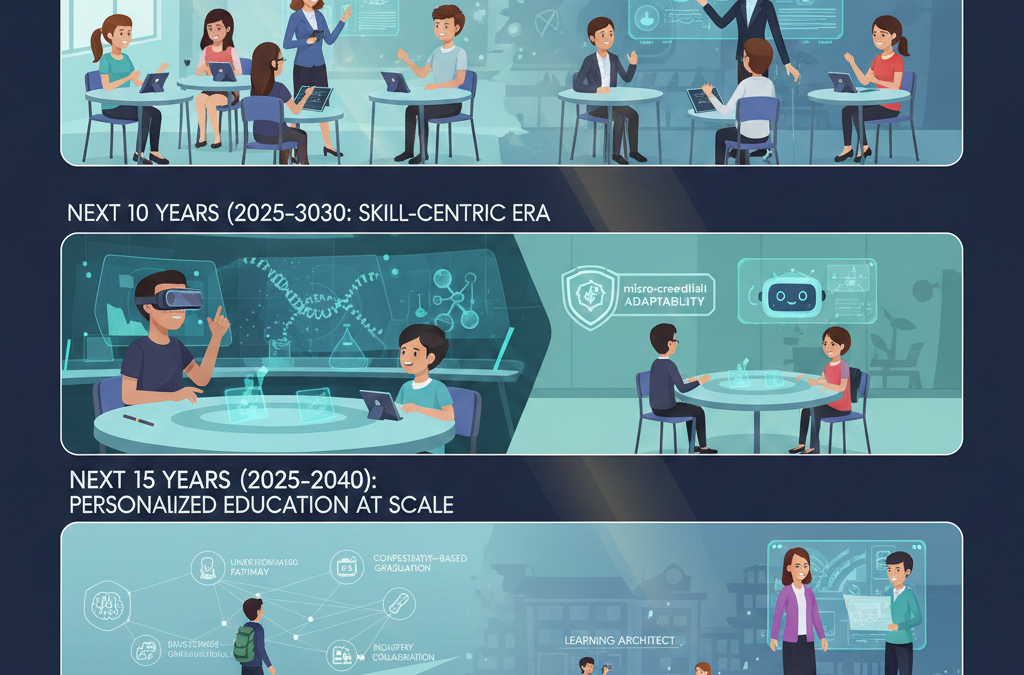
Education is transitioning from content delivery to capability development.
Next 5 Years (2025–2030): The AI Integration Phase
AI becomes a daily classroom assistant
Automated grading and feedback normalize
Hybrid learning models dominate
Teachers shift to facilitators and mentors
Digital portfolios replace report cards
Schools that delay AI integration will face relevance gaps, not just skill gaps.
Next 10 Years (2030–2035): The Skill-Centric Era
Curriculum reorganized around skills, not subjects
Micro-credentials embedded into schooling
VR and simulation labs replace traditional labs
Emotional intelligence and adaptability assessed formally
AI tutors provide 24/7 learning support
Schools become learning experience centers, not buildings.
Next 15 Years (2035–2040): Personalized Education at Scale
Each student follows a unique learning pathway
Graduation is competency-based, not age-based
Teachers act as learning architects
Schools merge with higher education and industry
AI predicts learning needs before failure occurs
The concept of a “standard classroom” disappears.
Key Takeaway
The future of education is adaptive, intelligent, and human-centered. Systems that resist this evolution will not collapse—but they will slowly become irrelevant.
In the last decade, educational technology (Ed-tech) has evolved from a supporting tool to the very foundation of modern learning. Classrooms are no longer limited by walls or traditional textbooks — they’re powered by interactive screens, digital resources, and cloud-based systems that make education more engaging, accessible, and personalized than ever before.
The Digital Shift in Education
From virtual classrooms to AI-driven learning assistants, technology is reshaping how students learn and how teachers teach. Cloud platforms allow schools to manage attendance, assignments, and assessments online, while video conferencing tools make it possible to connect learners from across the globe.
Even in traditional settings, tools like smart-boards, tablets, and learning management systems (LMS) have become essential. Teachers can now track progress in real time, identify learning gaps, and adapt their methods based on student data — something that was impossible just a few years ago.
Personalized Learning for Every Student
Every learner is unique. Ed-tech solutions powered by artificial intelligence are helping schools personalize lessons according to each student’s pace and ability. Adaptive learning platforms recommend exercises, videos, and quizzes tailored to each learner’s performance — making learning both fun and effective.
Ed-tech Beyond the Classroom
Technology is not just changing how we teach, but also how students engage outside class. Mobile learning apps, gamified quizzes, and online collaboration tools keep students connected and motivated. Parents can monitor academic progress in real time, fostering a stronger partnership between home and school.
The Next Step: Smart Classrooms and AI Integration
As we move forward, smart classrooms powered by IoT (Internet of Things) and AI analytics will become the norm. From automatic attendance to AI tutors that support struggling students, technology will continue to make education more efficient and inclusive.
China is rapidly transforming its classrooms using artificial intelligence and digital desk technologies to create highly immersive and personalized learning environments. From primary schools where “smart desks” equipped with sensors and facial-recognition cameras monitor students’ posture, attention and emotional state, to secondary lessons where AI systems analyze individual learning data and recommend customized tasks in real time, the change is sweeping. The country’s national education authorities have made AI education compulsory across all levels, embedding digital desks and AI-powered platforms into daily learning in order to cultivate digital literacy, problem-solving, and collaborative skills for the future generation.
Final Thoughts
Educational technology is far more than a passing trend — it’s the foundation of the future learning experience. Schools, educators, and students who embrace digital transformation are not just adapting to change; they’re driving it. By integrating smart tools, data-driven insights, and interactive platforms, they’re shaping a generation that learns faster, collaborates better, and thrives in a connected, creative, and knowledge-driven world.