Uncategorized
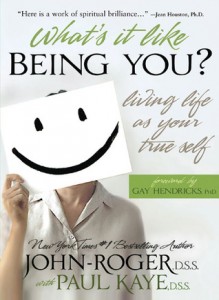 INTRODUCTION
We all play many parts in life: daughter or son, sister or brother,
parent, boss, employee, leader, assistant, friend. We also play
many different characters, sometimes in a single day: we can be a
hero at work and an average Joe at home, or vice versa. But what
if beyond all those parts and characters, there is a more fundamental
role you can play—your true self, the you who is uniquely you?
What if you were so familiar with this role that you were completely
comfortable with yourself and at ease in all circumstances?
There’s a wonderful story about a rabbi who dies and goes to
heaven. He has led a devoted life, following as closely as he could in
the footsteps of the prophets and sages, and so, naturally, he expects
God to greet him with praise. But when the rabbi arrives at the
pearly gates, God just looks at him and says, “I made you uniquely
you. Why did you spend your life trying to be someone else?”
This book is a guide to being yourself. The reflections, practices,
and inspirational quotations are designed to assist you in
becoming who you really are. Only you can answer the question
posed in the title: What’s it like being you? But in these pages, you
can explore a variety of approaches to help you connect with your
true self.
First and foremost, this book is practical, aimed at giving you the
experience of living in your true self as both a spiritual practice
and an antidote to the stress of modern life. We now have
conclusive evidence that stress has serious health consequences,
weakening the immune system, damaging the heart, and affecting
memory cells in the brain—just for starters. In a recent New York
Times article, neuroscientist Bruce S. McEwen of Rockefeller
University pointed out:
We’re now living in a world where our systems are
not allowed a chance to rest, to go back to base line.
They’re being driven by excess calories, by
inadequate sleep, by lack of exercise, by smoking, by
isolation, or frenzied competition.
But there is truly no rush to go anywhere. Nobody is leaving
this earth alive. The true self waits patiently for us to come to it.
So why not slow down and enjoy the path of self-discovery?
Lao Tsu, the ancient Chinese philosopher, said: “In the pursuit of
learning, every day something is acquired, and in the pursuit
of spirit, every day something is dropped.” It is my hope that in
addition to gaining something from reading this book, you will also
come away feeling lighter and freer from having let something go.
The false self (everything that is not truly you) is what you
s u render in the process of becoming who you are. When you strip
away the opinions and postures and addictions of the ego-driven
personality, what remains is the role of a lifetime—playing yourself.
You can start anytime. Why not right now? As you move away
from the self-defeating patterns of the false self, you move closer
to the source of nourishment and renewal. Here in the true self—
the Soul—we find Spirit, and we come alive.
Please Note:
The following words are used interchangeably
throughout the book:
False self, personality, ego
True self, Soul
God, Spirit
The John-Roger quotations on the left-hand pages
are designed to assist you in attuning to the true self.

Personal Improvement, Research & Reports
 The dictionary defines it as trust or faith, being sure. I believe it means feeling good about yourself, especially in regard to accomplishing something. That something can be a new job, a new assignment, a performance review, networking, or a meeting with co-workers.
Here are a few actions that will result in real payoffs in our confidence quotients.
MOVE
No, not to a new job or neighborhood. Move your body. Take the stairs instead of the elevator. Park farther away from the store you’re about to visit. Walk. Run. Ride a bike. Do yoga. Lift weights, even if it means doing your reps with a five-pound bag of flour in each hand. Work up a sweat. You’ll feel better.
The bottom line is, when we feel better, we become more confident. Exercise clears the brain and the lungs, making room for newer, better, and possibly bolder thoughts. It gives us more energy. And – let’s face it – energy is attractive. Energetic people magnetize others.
Nothing enhances your overall appearance like being fit. A good regimen of exercise will improve not only your posture but your personality. I believe that fit people look more focused and more confident.
Exercise not only increases strength and endurance. I find, too, that it helps mightily to defuse anger and frustration, and it gets the creative juices flowing.
TAKE A LOOK AT WHAT YOU ARE WEARING
There is no such thing as neutral clothing. Everything you put on represents a decision you have made and is a reflection of your good taste, your good sense, and your style. Remember, we judge others more on the basis of what we see than anything else. If your attire is inappropriate, colleagues are apt to question whether you know the rules of the game and whether you are or are not likely to be a significant player. Your superiors are apt to conclude that the quality of your work will match the quality of your appearance.
When you’re considering how to dress for a work situation, ask yourself these questions:
* Who am I?
* What role am I playing?
* How do I want to be perceived?
* Where am I?
* Who are the people I want to impress favorably?
We’re not talking fashion statements here; we’re talking about what works in a given environment to be effective.
Grooming is everything. Develop four key relationships and you won’t go wrong:

* Tailor: Good fit can make an inexpensive garment look like a million, while poor fit can make even an Armani look sloppy.
* Dry cleaner: The chemicals can be damaging to fabrics, so go to a reliable establishment and inspect your garments before leaving the shop.
* Shoemaker: We all notice other’s shoes, mostly because we often get nervous and end up looking at the floor. Keep shoes well soled, shined, and in good repair.
* Dentist: A clean, bright smile makes us feel better about ourselves.
BREATHE
Find sanctuary inside yourself. There is honor in standing still. We are so time-crunched, information-bludgeoned, downsized, and multi-tasked that it’s spiritually suffocating. Who we really are comes from the inside out. Without a way to “go inside” and focus, we add to our environment’s chaos rather than its harmony.
Learn “belly breathing”: lie down on the floor, be quiet and place your hands on your tummy. Breathe from your belly, letting your belly rise and fall like a bellows. Babies breathe this way and we know how self-confident they are. I’ve learned to belly breathe on elevators, in rest room stalls, and in the middle of crowded rooms when I need to calm down and focus. No need to “om”.
BE DISCIPLINED
Keep your agreements.
Be on time.
Be mindful and in the present.
That is a gift to yourself as well as others. Whatever we think and feel now creates what happens in the future. When we stick to the “now” and don’t chase rabbits, we are involved and aware of opportunities. Others we deal with will sense that we’re fully with them. That has tremendous impact on the quality of our personal and professional relationships.
GIVE AND RECEIVE
Give whatever you hope to receive in turn. If you want more cooperation and respect, give respect and cooperate. If you want to succeed, help others succeed. If you want more joy, be more joyful. When we circulate our positive energy, we create more and more to enjoy.
* Be open to giving to yourself. Honor your own worthiness to receive or no one else will.
Perhaps, as you read this, you are thinking, “Yeah, so tell me something new. I know this already.”

Personal Improvement
 Can’t stop worrying? Try out our seven ways to beat the bother and boost your happiness. Whilst worrying is necessary for spurring us on to achieve our goals, chronic worrying can disrupt the balance in our nervous system and be detrimental to our health. Here are seven ways to wash away your worries:
How to stop worrying, tip 1: Forget the things you can’t change
If you’re worrying about something that’s happened in the past, you need to stop. The power of your mind isn’t strong enough to solve problems through panic, so it’s important to beat your worries by thinking logically and tackling them head-on. Bad memories from the past are toxic to our health and highly counterproductive so you must bury the burdens of your past and move on.
How to stop worrying, tip 2: Write a worry list
Write down everything you’re worried about; the bills, your job, the car MOT – everything. Then rate them on a scale of one to 10, with 10 being the things that are concerning you most. You can then turn your worry list into an action list. Take action on the worries that you rated the highest first, and then work through the rest of the list. You will feel a sense of relief each time you tick a worry off, and this is a sure-fire way to boost your happiness and relieve your worries.
How to stop worrying, tip 3: Discipline your thoughts
If you’re a chronic worrier, you need to learn to take control of your thoughts rather than letting them take control of you. To do this, every time you think a negative thought, you must turn it into a positive. Every time you worry, think “is this really helpful?” If the answer is no, turn the thought into a positive or forget it completely. Whilst this may seem difficult at first, it will eventually become second nature and you will find that turning a negative into a positive is a much more constructive way of dealing with your thoughts.
How to stop worrying, tip 4: Distract yourself through relaxation
When we’re worried – particularly about a number of things at once – our brains don’t tend to find a logical solution to our problems. In order to think logically, we must take the time to relax and unwind. Breathe in through your nose, and out through your mouth. After a couple of minutes of relaxation, the tension will leave your body and you will be in a better position to tackle the problem from a fresh perspective.
How to stop worrying, tip 5: Talk to friends and family
A problem shared is a problem halved. Talk to your family, your friends, or a doctor if you have a good relationship with them. Sometimes saying your problems out loud can get your thoughts straight in your head and if you’re worrying about something useless, saying it out loud can make you realise that it’s just not worth the worry. With those close to you, you can laugh, cry, and moan as much as you like without being judged and this is a healthy way to relieve stress.
How to stop worrying, tip 6: Confront the problem head-on
Some worries can’t be tamed through talking to others or relaxation. A problem that won’t go away until you physically do something about it needs to be confronted head-on. Sometimes, we have so much on our mind that we don’t know what to deal with first. Make a decision on which problem you want to solve and how you will go about it, and then stick to it. You will probably find that once you resolve the problem, you’ll wish you’d done something about it sooner.
How to stop worrying tip 7: Put things into perspective
Don’t be overwhelmed by small things; try and see the bigger picture. Is your problem really as bad as you’re making it out to be? The chances are there will be many people worse off than you. Instead of zoning in on certain things and panicking about them, put everything into perspective. Does this problem affect your entire life? Will you still be panicking about this in a few weeks or months time? If the answer is no, then it’s really not worth the worry.

Personal Improvement

Get more luck in your life
Ever feel as though some people have more luck than you? Inject your life with some much needed good fortune. With the aid of positive thinking you can turn that frown upside down, start living your life to its full potential and achieve your dreams, without feeling the need to reach for that scratch card.
Look for the silver lining
It is inevitable that some people seem to get more luck than others, but should we just wait to see if luck strikes for us or take matters into our own hands? We can help ourselves a lot by looking for the silver lining in a negative situation. If you focus on the negatives you are only going to cloud your judgment on the solution, so adopt a more positive outlook on the situations in your life and you will feel better about how to handle them and begin to assume a lucky mentality. Change your thoughts and luck will follow.
Be on the lookout for new opportunities
Very rarely do opportunities for luck present themselves; when they do it’s fantastic, but the chances are this is not going to occur. Nine out of 10 times things happen because we make them happen, so why not take some calculated risks to increase your opportunities. Take smaller risks at first and if they pay off you can increase them. You should always be on the lookout for new prospects, whether it is in the workplace or in your social life. Keep your eyes and ears open as you never know what’s just around the corner and you don’t want to miss out!
Cut loose your anxieties
Individual hang ups can hold us back from doing everyday tasks in our lives. Adopt the mantra: ‘what’s the worst that could happen?’ Don’t let your anxiety get the better of you; your mind is very powerful and anxiety is just a learnt behavior. Sometimes putting yourself in a stressful situation is OK and to explore new paths in life is essential. Sitting back is all well and good if you’re willing to watch the world go by, but the more open you are to new opportunities the more you’ll increase your chances of luck, so let go of that anxiety and go for it!
Trust your instincts
People who make quick decisions can be led by their intuition. Your gut instinct is more than likely correct; how many times have you been stuck in a situation where you knew things weren’t right from the off, but still carried on and things have turned sour? Listening to yourself can really help you make the right decisions. So how can you become more intuitive? Take some time for yourself, relax in the bath or go for a walk and clear your head. Spending time with yourself will help you understand your thoughts clearly; that way when the next decision has to be made you will know exactly what you think and you can manage the situation with a clear decisive answer.
Learn how to deal with bad luck
The way we deal with bad luck can be detrimental to how we view our lives. A pessimistic person can always see the bad in everything, and to dwell constantly on the bad will inevitably get you down in the dumps. Try to put a positive spin on all the bad situations you find yourself in; focusing what could have made that situation worse will give you that pick up to see you through the rough patch. It isn’t possible to always be happy and positive about everything or everyone in your life, but making a concerted effort to have a happier and brighter outlook on life will make you appreciate the luck you already had in your life that you didn’t notice.