Uncategorized
Introduction: A New Era for Cybersecurity Careers
Artificial intelligence is rewriting the rules of cybersecurity — and nowhere is that change more visible than in entry-level roles.
In Cisco’s Learn with Cisco video, “How Generative AI Is Changing Entry-Level Cybersecurity Roles”, experts explain how generative AI is automating tasks, creating new responsibilities, and redefining what it means to start a cybersecurity career.
For students, job seekers, and early-career professionals, understanding these changes is crucial to stay competitive in the cybersecurity job market.
Why Generative AI Matters in Cybersecurity
Generative AI tools like ChatGPT, Copilot, and custom LLMs are now being integrated into security operations centers (SOCs) to analyze threats, summarize reports, and detect anomalies.
According to Cisco and Indeed experts, this shift is creating “AI-augmented analysts” — professionals who combine human judgment with machine intelligence.
The result?
Entry-level cybersecurity jobs are becoming more strategic, analytical, and collaborative.
1. Automation Is Changing Entry-Level Tasks
Previously, junior analysts spent hours parsing logs, documenting incidents, or running repetitive scans. Now, AI can automate much of that work — freeing up human professionals to:
- Investigate complex threat patterns
- Validate AI-generated alerts
- Communicate findings to management
Generative AI doesn’t replace analysts — it elevates them. Entry-level employees are now AI supervisors, ensuring automation is accurate, ethical, and efficient.
2. New Skill Sets Are in Demand
The “AI wave” is reshaping what employers expect from entry-level cybersecurity hires.
Here’s what’s becoming essential:
| Skill Type |
Description |
| AI Literacy |
Understand how AI models make decisions, and where they can fail (bias, hallucination, etc.). |
| Data Analysis |
Comfort with Python, log data, and visualization tools like Splunk or Power BI. |
| Prompt Engineering |
Knowing how to write clear, precise prompts to guide AI tools effectively. |
| Ethical Awareness |
Understanding AI’s limitations and privacy implications in cybersecurity. |
| Soft Skills |
Communication, teamwork, and critical thinking — especially when reviewing AI-generated reports. |
Cisco emphasizes that the most successful cybersecurity professionals will blend technical fundamentals with AI fluency.
3. Roles Are Shifting from “Doers” to “Directors”
As generative AI handles more detection and documentation tasks, entry-level analysts are evolving into AI orchestrators — people who guide, monitor, and interpret machine-driven actions.
Instead of running commands, they design the logic behind automated playbooks, validate AI-generated incident reports, and fine-tune alert thresholds.
This is a fundamental mindset shift:
“The new entry-level cybersecurity professional is both a defender and a data-driven decision-maker.” — Cisco Learn Program
4. The Rise of Skills-Based Hiring
Companies like Cisco and Indeed report that employers are now focusing on skills-first hiring rather than rigid job titles.
This means recruiters care more about what you can do than what you studied.
To stand out, aspiring professionals should:
- Showcase projects using AI for security automation
- Highlight measurable outcomes (e.g., “Used Python to automate phishing detection, reducing false positives by 20%”)
- Use storytelling frameworks like the STAR method (Situation, Task, Action, Result) in resumes and interviews
5. Preparing for AI-Augmented Cybersecurity Careers
If you’re entering cybersecurity in 2025 and beyond, here’s how to prepare:
Learn the Fundamentals
Networking, cloud security, incident response, and ethical hacking remain foundational.
Get AI-Literate
Take Cisco’s AI learning modules or courses on AI for cybersecurity. Understand how tools like Cisco SecureX, Splunk AI, or Microsoft Copilot for Security are used in the field.
Practice Prompting
Experiment with using generative AI for:
- Writing SOC reports
- Generating incident summaries
- Simulating phishing or malware analysis
Build a Personal Project Portfolio
Publish GitHub projects or blog posts showcasing your AI + cybersecurity experiments. Recruiters love proof of skill over theory.
Stay Ethical and Responsible
Understand AI’s limitations, especially around data privacy, bias, and security risks like model poisoning or prompt injection.
6. Challenges Ahead
While AI offers new opportunities, it also brings new challenges:
- Overreliance on AI can weaken human judgment
- AI-generated false positives can overwhelm security teams
- Bias in data can lead to blind spots in detection systems
- Ethical issues — who is responsible when an AI makes a wrong call?
That’s why human oversight will always remain the backbone of cybersecurity.
The Future of Cybersecurity Jobs
In the coming years, cybersecurity roles will evolve into hybrid human-AI partnerships.
AI will:
- Detect threats faster
- Automate remediation
- Provide real-time risk summaries
Humans will:
- Make final decisions
- Investigate anomalies
- Handle governance and ethical oversight
Those who master both worlds — security fundamentals and AI systems — will lead the next generation of cybersecurity experts.
Final Thoughts
Generative AI is not taking cybersecurity jobs — it’s transforming them.
For beginners, this is the best time to enter the field. With the right mix of curiosity, technical skills, and AI literacy, you can thrive in an industry that’s evolving faster than ever.
“AI is your co-pilot, not your competitor. Learn to guide it, and you’ll future-proof your cybersecurity career.” — Cisco Learning Team
software
Managing a school involves juggling countless responsibilities—from student enrollment and scheduling to billing, assessments, and parent communication. Each task traditionally required separate systems, creating inefficiencies and increasing the administrative burden on staff. Spark-ED changes this with a comprehensive, all-in-one school management solution designed to simplify operations while supporting learning outcomes and keeping parents engaged.
What Is Spark-ED?
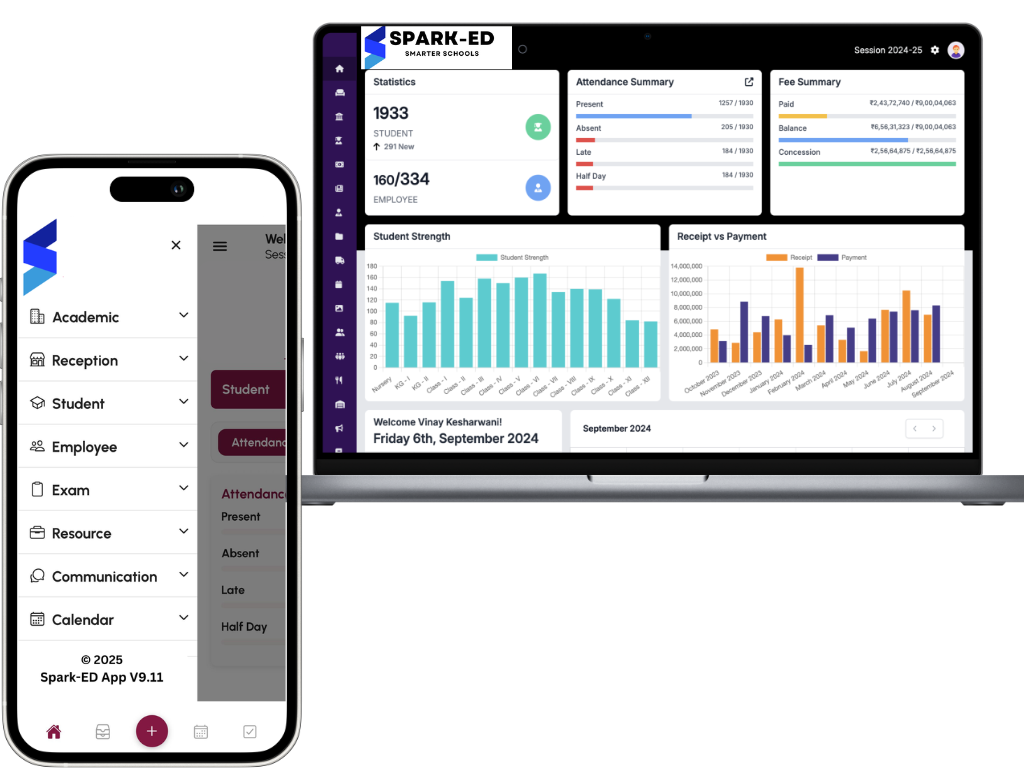
Spark-ED is a modern, cloud-based school management system that consolidates the entire operations of educational institutions into a single, intuitive platform. Described as “Smart, Seamless, and Powerful,” this application brings together people, operations, and data in one accessible location, making it easier for schools to manage day-to-day activities and focus on what matters most: education.
Features Designed for Every School Type
Spark-ED’s versatility makes it suitable for multiple educational contexts. For traditional schools, the platform handles kindergarten through high school management with features including student registration, class assignment, timetable scheduling, and graduation tracking. Its comprehensive approach extends to higher education institutions, offering universities, colleges, and vocational schools tools for admission management, assessment, learning analytics, billing, and marketing processes.
Beyond conventional schools, Spark-ED serves specialized institutions such as language academies, music schools, dance studios, and other learning organizations. These specialized editions are tailored to handle end-to-end processes specific to supplementary education, making the platform adaptable to various learning environments.
Core Capabilities That Save Time
The platform consolidates essential school functions into one unified system, reducing the need to switch between multiple applications and databases. Key features include:
Student Management and Registration: Handle pre-registration, admissions, student profiles, class assignments, and graduation processes efficiently. All student data is centralized and easily accessible to authorized staff members.
Scheduling and Timetables: Create and manage school timetables without the complexity and confusion of traditional scheduling systems. The platform streamlines the process of assigning students, teachers, and resources to specific time slots.
Assessments and Learning Analytics: Track student progress through integrated assessment tools that provide insights into learning outcomes and help identify areas for improvement.
Billing and Financial Management: Manage school fees, payments, and financial transactions securely within the system, providing transparency for both staff and parents.
Transportation Services: Coordinate school transportation logistics seamlessly, from route planning to pickup and dropoff tracking.
Parent Communication and Involvement: Keep parents informed and engaged with built-in communication tools that bridge the gap between school and home.
User-Friendly Design
One of Spark-ED’s greatest strengths is its ease of use. Educational institutions often struggle with complex software that requires extensive training and creates friction among staff. Spark-ED addresses this with an intuitive interface that reduces the learning curve and allows teachers, administrators, and staff to adopt the system quickly. The dashboard provides clear visualization of key information, making it easy to access critical data at a glance.
Scalability for Growing Schools
Whether you’re managing a small private academy or a large school district, Spark-ED scales to meet your needs. The system is fully configurable and customizable, allowing schools to adapt the platform to their unique requirements rather than forcing schools to adapt to rigid software constraints.
Data-Driven Decision Making
By bringing all school operations into one platform, Spark-ED enables administrators to access comprehensive data about admissions, student performance, finances, and operations. This centralized data approach makes it easier to identify trends, make informed decisions, and optimize resource allocation.
Getting Started with Spark-ED
For schools considering a transition to a modern management system, Spark-ED offers demonstrations that showcase the platform’s capabilities. Schools interested in learning more can book a demo to explore how the system can address their specific operational challenges.
Managing a modern school requires tools that match the complexity of educational operations while remaining simple enough for staff to use effectively. Spark-ED delivers on this promise by combining powerful functionality with an intuitive interface, allowing schools to eliminate silos between departments and reduce administrative overhead. In doing so, schools can redirect their focus and resources toward what they do best: providing quality education and supporting student success.
For schools seeking a comprehensive solution to streamline operations while maintaining strong parent engagement and data-driven decision-making, Spark-ED represents a significant step forward in modern school management technology.
Book A Demo
https://spark-ed.app/book-a-demo/
https://spark-ed.app/
life, Personal Improvement
The job market of 2030 will look radically different from today. Automation is reshaping industries, artificial intelligence is becoming ubiquitous, and the pace of change has accelerated to a point where yesterday’s expertise can become obsolete within years. Yet amid this uncertainty, one truth remains clear: the future belongs to those who know how to learn, adapt, and grow.
The question isn’t which specific job will exist in five years. It’s which skills will remain valuable regardless of which direction the economy takes. These are the capabilities that transcend roles, industries, and technological shifts.
Critical Thinking in an AI-Driven World
As artificial intelligence becomes increasingly capable at handling routine cognitive tasks, the uniquely human skill of critical thinking has never been more valuable. AI can generate answers, but it can’t always question whether those answers are right.
Critical thinking means moving beyond information consumption to active evaluation. It means asking why something matters, what assumptions underlie a proposal, and what evidence actually supports a claim. In a world of infinite data and AI-generated content, this skill separates those who lead from those who are led.
Developing critical thinking requires practice. Read widely but skeptically. Engage with viewpoints that challenge your own. Ask “why” more often than you ask “what.” These habits compound over time into a genuine competitive advantage.
Adaptability and Learning Agility
The hardest part of change isn’t the change itself—it’s the willingness to embrace it. Adaptability is less about being comfortable with uncertainty and more about being energized by it. It’s the mindset that every disruption is an opportunity to learn something new.
Learning agility specifically refers to your capacity to learn from experience and apply that learning to new situations quickly. It’s the difference between someone who panics when their industry shifts and someone who sees it as a chance to develop new expertise.
To build this skill, seek out unfamiliar challenges. Take on projects outside your comfort zone. Reflect on what you learned and how it might apply elsewhere. People with high learning agility don’t just survive change—they thrive in it.
Emotional Intelligence and Collaboration
As routine tasks become automated, the skills that remain are fundamentally human: understanding people, building relationships, and working effectively in teams. Emotional intelligence—the ability to recognize and manage emotions in yourself and others—is increasingly what separates high performers from the rest.
This isn’t soft skill in the diminishing sense. It’s the foundation of leadership, negotiation, conflict resolution, and innovation. Organizations succeed when teams can communicate effectively, navigate disagreements constructively, and maintain trust through change.
The good news is that emotional intelligence can be developed at any stage of your career. It requires honest self-reflection, genuine curiosity about others, and intentional practice in your daily interactions.
Technical Literacy Without Specialization
You don’t need to become a data scientist or software engineer to benefit from technical skills. What you need is functional literacy—enough understanding to work effectively with technology and collaborate with specialists.
This might mean understanding how data is collected and analyzed, knowing the basics of how AI systems work, or being able to evaluate new tools for your workflow. The goal isn’t expertise; it’s informed participation. Someone who understands the limitations of a model is more useful than someone who blindly trusts it.
Technical literacy is increasingly accessible through short courses, online learning platforms, and hands-on experimentation. The barrier to entry is curiosity, not prerequisite knowledge.
Systems Thinking
Problems rarely exist in isolation. A supply chain disruption creates workforce challenges. A climate policy affects real estate markets. A social media trend shifts consumer behavior. The ability to understand how different elements of a complex system interact—and to predict second and third-order effects—is invaluable.
Systems thinking means looking beyond immediate cause and effect to understand underlying patterns and feedback loops. It’s how you anticipate problems before they arrive and design solutions that actually work rather than creating new problems.
Develop this skill by studying complex domains outside your expertise. Learn how your organization actually works beneath the org chart. Ask “what else changes if we do this?” and follow the logic through.
Creativity and Problem-Solving
As routine tasks disappear, the remaining human work becomes increasingly creative. Whether you’re developing new products, reimagining business models, or navigating unprecedented challenges, creativity becomes essential.
But creativity isn’t just for artists. It’s the ability to combine existing ideas in novel ways, to see problems from fresh angles, and to imagine possibilities others haven’t considered. It’s a skill that can be trained through practices like brainstorming, design thinking, and deliberately seeking diverse perspectives.
The Meta-Skill: Continuous Learning
If there’s one skill that encompasses all others, it’s the commitment to continuous learning. The specifics of what you need to know will change. Your ability to learn new things won’t.
This means building habits that keep your mind sharp and current. Read widely. Pursue certifications and courses in areas adjacent to your expertise. Find mentors and teach others. Experiment with new tools and approaches. Reflect regularly on what you’ve learned and how you’ve grown.
Building Your Future Today
The skills that matter most tomorrow won’t be learned in a panic when disruption arrives. They’re developed gradually through intentional practice over months and years. Start now. Pick one skill from this article that resonates with you. Commit to building it over the next quarter.
The future workforce won’t be defined by the jobs that exist or the technologies that emerge. It will be defined by people who see change as the only constant and equip themselves with the skills to thrive within it. That can be you—but only if you start building those capabilities today.
The question isn’t whether the future will be different. It will be. The question is whether you’ll be ready.
life, love
We live in a world that often celebrates perfection. Social media filters out our flaws, professional environments reward flawlessness, and cultural narratives push the myth that successful people simply don’t mess up. But here’s the truth: making mistakes is one of the most universal human experiences. Whether you’re a CEO, a student, a parent, or a retiree, you’re making mistakes regularly—and that’s not just okay, it’s essential to growth.
The Most Common Mistakes We All Make
- Procrastination: The Thief of Time and Peace
Procrastination is arguably the most widespread mistake. We delay tasks by telling ourselves we work better under pressure, or that we’ll feel more motivated tomorrow. Yet study after study shows that procrastination doesn’t just waste time; it increases stress, reduces work quality, and damages our self-confidence.
We procrastinate on everything from important emails to health appointments to difficult conversations. The mistake isn’t the initial delay—it’s failing to recognize that procrastination is usually rooted in fear, perfectionism, or discomfort rather than any legitimate reason. The remedy isn’t willpower alone; it’s understanding what we’re actually avoiding and breaking tasks into manageable pieces that feel less intimidating.
- Not Listening Fully During Conversations
In our hyperconnected world, we’re physically present but mentally elsewhere. We think we’re listening while mentally rehearsing our response, checking our phone, or planning what we’ll say next. This is one of the most damaging social mistakes because it signals to others that they don’t matter to us.
Real listening requires presence. It means resisting the urge to interrupt, staying curious about what someone is saying rather than judging it, and asking clarifying questions. Most relationship problems stem not from people being incompatible but from feeling genuinely unheard. When we commit to truly listening, we transform our connections with others.
- Comparing Ourselves to Others
Comparison is the thief of joy, yet we do it constantly. We see someone else’s success and feel diminished. We watch others’ highlight reels on social media and believe our own lives are somehow less valuable. This mistake erodes self-worth and creates a scarcity mindset where someone else’s success feels like our loss.
The truth is that comparison is fundamentally flawed. You’re comparing your behind-the-scenes reality to someone else’s carefully curated highlight reel. You’re missing context, struggle, and failure. Everyone’s journey is uniquely their own, and progress should only be measured against your own previous self.
- Avoiding Difficult Conversations
Whether it’s addressing a problem with a loved one, providing critical feedback at work, or expressing an unpopular opinion, we often sidestep difficult conversations. We convince ourselves that avoiding conflict keeps the peace, when in reality, unspoken issues fester and grow.
This mistake often comes from fear of rejection, conflict, or disappointing others. But avoiding these conversations typically makes problems worse. Difficult conversations, when approached with honesty and compassion, actually strengthen relationships and solve problems more efficiently than silence ever could.
- Neglecting Our Physical and Mental Health
We know we should exercise regularly, eat well, sleep enough, and manage stress. Yet billions of people regularly ignore these foundational elements of wellbeing. We tell ourselves we’re too busy, or that we’ll start tomorrow, or that we don’t have time for self-care.
This is perhaps the most consequential mistake because health impacts everything else in our lives. When we’re exhausted, stressed, and out of shape, our ability to perform at work, maintain relationships, and make good decisions all suffer. The mistake isn’t about lacking knowledge—it’s about failing to prioritize what actually matters most.
- Holding onto Grudges
When someone hurts us, we often hold onto anger long after the initial pain should have faded. We replay the offense, rehearse what we should have said, and construct elaborate narratives about their intentions. Holding grudges is like drinking poison and expecting the other person to get sick.
This mistake damages us far more than it damages the person we’re angry at. Research shows that holding grudges increases stress, elevates blood pressure, and contributes to depression. Forgiveness—which doesn’t mean condoning the action—releases us from this burden and allows us to move forward.
- Being Too Hard on Ourselves
There’s a difference between healthy self-reflection and self-criticism. Many of us have harsh inner critics that would never be tolerated if they were external voices. We beat ourselves up over minor mistakes, catastrophize small failures, and carry shame for things that deserve only compassion.
This mistake keeps us stuck in negative cycles. Research on self-compassion shows that treating ourselves with kindness during difficult times actually makes us more resilient and more likely to get back on track. The goal isn’t to let ourselves off the hook for real mistakes—it’s to respond to failure with the same kindness we’d offer a good friend.
- Seeking Perfection Instead of Progress
Perfectionism masquerades as high standards but is actually a profound mistake. Perfectionists often don’t start projects because they might not be perfect. They delay launching because conditions aren’t ideal. They finish 90% of tasks but never complete them because they can’t be 100% right.
Growth happens through iteration and refinement, not through waiting for perfect conditions. The best entrepreneurs, artists, athletes, and professionals got where they are by doing imperfect work repeatedly and learning from feedback. Progress beats perfection every single time.
- Not Setting Boundaries
Whether it’s saying yes to everything at work, letting people interrupt you constantly, or being available 24/7 to everyone in your life, most of us struggle with boundaries. We mistake boundaries for rudeness and believe that saying no makes us selfish.
Actually, boundaries are essential. They protect your time, energy, and wellbeing. They communicate to others what you value and what you won’t tolerate. People who set healthy boundaries tend to have better relationships, more productive work lives, and greater overall satisfaction. The mistake is believing that accommodating everyone else’s needs is noble rather than destructive.
- Giving Up Too Easily
Success rarely follows a straight line. Yet when we encounter obstacles or setbacks, we often interpret them as signs that we’re not meant to succeed. We give up just as things might be about to work out.
This mistake costs us opportunities and growth. Resilience—the ability to keep going after difficulty—is perhaps the most important ingredient in any success story. Most people who accomplish meaningful things aren’t inherently more talented; they simply didn’t quit when things got hard.
Why We Make These Mistakes
Understanding why we make mistakes is more important than cataloging what they are. Most mistakes stem from a few core issues:
Fear drives many mistakes. We procrastinate because we fear failure. We avoid difficult conversations because we fear conflict. We seek perfectionism because we fear judgment. Recognizing the fear underneath the mistake is the first step to addressing it.
Habit plays a huge role too. We operate on autopilot much of the time, repeating patterns without conscious evaluation. Breaking habits requires not just wanting to change but deliberately practicing new behaviors until they become automatic.
Lack of awareness means we don’t always recognize we’re making a mistake. We think we’re being realistic when we’re actually being self-critical. We think we’re working efficiently when we’re procrastinating. Developing self-awareness through reflection, feedback from others, and honest assessment is crucial.
Unrealistic expectations set us up for failure. We expect ourselves to be consistent when humans are naturally variable. We expect others to read our minds. We expect change to happen overnight. Adjusting our expectations to be realistic doesn’t mean lowering our standards—it means being honest about what’s actually possible.
How to Learn From Your Mistakes
The real value of making mistakes isn’t in the mistake itself—it’s in what comes after. The difference between people who grow and people who stay stuck is often their response to failure.
Reframe mistakes as data. Each mistake contains information about what doesn’t work. Instead of viewing mistakes as failures, treat them as experiments. What did you learn? What would you do differently?
Don’t shame yourself. Research on behavior change shows that shame is counterproductive. You’re far more likely to change behavior if you respond with curiosity and self-compassion than if you respond with self-criticism.
Extract the lesson, then let it go. Spend time understanding what went wrong and how to do better next time, but don’t carry the mistake with you indefinitely. There’s a difference between learning from the past and being haunted by it.
Share your mistakes. Vulnerability is powerful. When you’re honest about your mistakes, you give others permission to be human too. You also often discover that others have made similar mistakes, which can be profoundly reassuring.
The Freedom in Being Imperfect
Here’s what taking mistakes seriously teaches us: perfectionism isn’t actually about excellence. It’s about fear. Real excellence comes from people who make mistakes, learn from them, adjust, and keep going.
When you accept that mistakes are inevitable, something shifts. You worry less about being perfect and focus more on being authentic. You take more risks because you know that failure won’t destroy you. You’re kinder to yourself and others. You engage more fully with life because you’re not constantly performing.
Everyone makes mistakes. The most successful, happiest, and most fulfilled people aren’t those who avoid mistakes—they’re those who make them boldly, learn quickly, and keep moving forward. Your mistakes aren’t evidence that you’re failing at life. They’re evidence that you’re engaging with it fully.
The path to wisdom isn’t paved with perfection. It’s paved with mistakes, learning, and the courage to keep trying.