GCC
The first reports of protests in Iran emerged on December 31, 2025. Initially, the situation appeared calm, with normal daily activity in major cities. Local guides and residents reassured visitors that such protests were not uncommon, typically recurring every six months, and that foreign visitors were generally not affected. Early reports indicated that local traders were beginning to strike and close shops, but there were no signs of widespread unrest at the time.
In the following days, the situation escalated rapidly. Demonstrations spread across multiple cities, and media outlets began reporting violent clashes. Despite alarming news coverage, some areas remained relatively unaffected initially, allowing citizens and visitors to move safely.
However, as unrest intensified, the protests quickly turned into large-scale disturbances across the country. Reports indicated that over 400 cities experienced significant unrest, with thousands of people injured or killed. Numerous government buildings, banks, vehicles, and places of worship were damaged or destroyed.
The regional instability drew international attention. The United States and Israel appeared to support demonstrators, with the U.S. threatening direct military intervention. Neighboring countries and Gulf states also took precautionary measures, deploying military assets to nearby areas. Analysts speculated about potential disruptions to communication networks, targeted attacks on leadership, and broader strategic interventions.
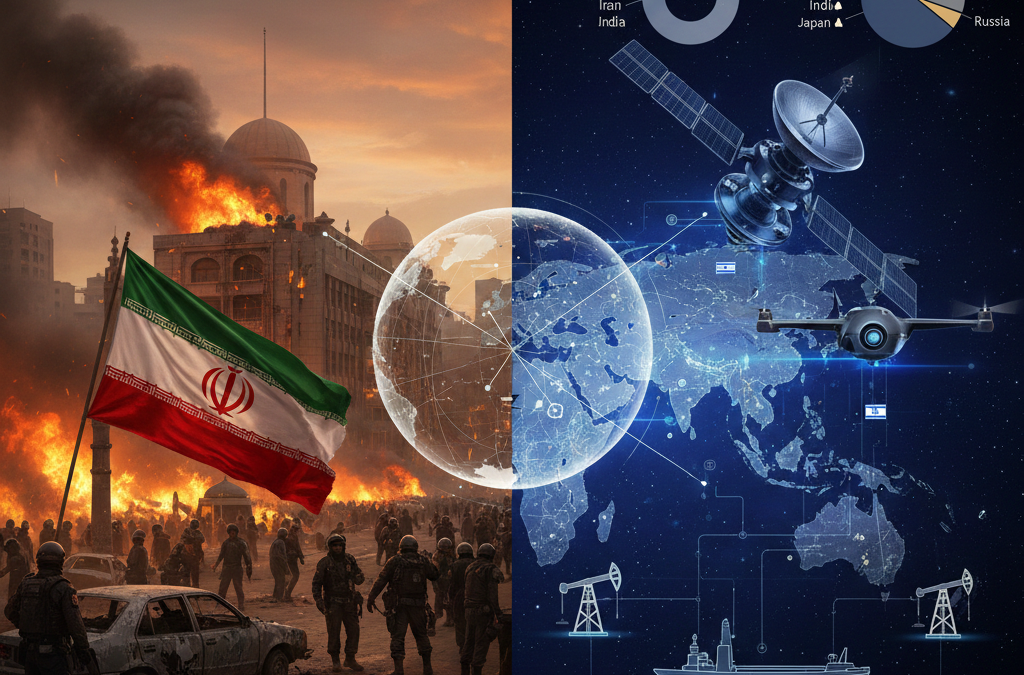
Underlying these tensions is the global importance of oil. Iran is among the world’s largest oil reserve holders, alongside Venezuela, Saudi Arabia, Canada, and Russia. Oil-producing nations hold the keys to energy security, while major consumers such as the U.S., China, India, and Japan rely heavily on these resources. Control over oil reserves has historically influenced economic power, geopolitical strategy, and military planning.
The strategic significance of Iran extends beyond oil. Global powers are investing heavily in space technologies, satellite networks, and advanced defense systems. Space-based capabilities can disrupt communications, track targets, and neutralize threats without traditional military engagement. Analysts argue that control over energy resources and space infrastructure will shape global influence in the coming decade.
In this broader context, current conflicts in Iran are seen not only as internal political unrest but as a focal point in the global competition for energy and technological dominance. Experts caution that the next several years will be critical for determining the balance of power, with countries investing in both energy security and space-based systems to secure long-term strategic advantages.
Ultimately, the events in Iran reflect complex intersections of domestic unrest, resource geopolitics, and emerging global technologies. Observers worldwide continue to monitor the situation, recognizing its potential impact on regional stability and the global economy.

AI, Education, GCC
Smart & Hybrid Classrooms
Redefining the Learning Environment for 2040
The classroom of the future is smart, flexible, and hybrid. AI-ready schools embrace environments where physical and digital learning merge seamlessly.
Smart classrooms use AI-enabled tools such as interactive boards, adaptive learning platforms, real-time assessments, and learning analytics to personalize instruction. Hybrid models ensure learning continuity, allowing students to engage anytime, anywhere—an essential capability in a rapidly changing world.
By 2040, learning will no longer be confined to a single space. Virtual labs, simulations, augmented reality, and AI tutors will expand access to high-quality education regardless of location.
Smart and hybrid classrooms shift education from teacher-centered delivery to student-centered experiences, preparing learners for digital workplaces and lifelong learning.
AI, Education, GCC
Part 2 of the AI-Ready Schools Series
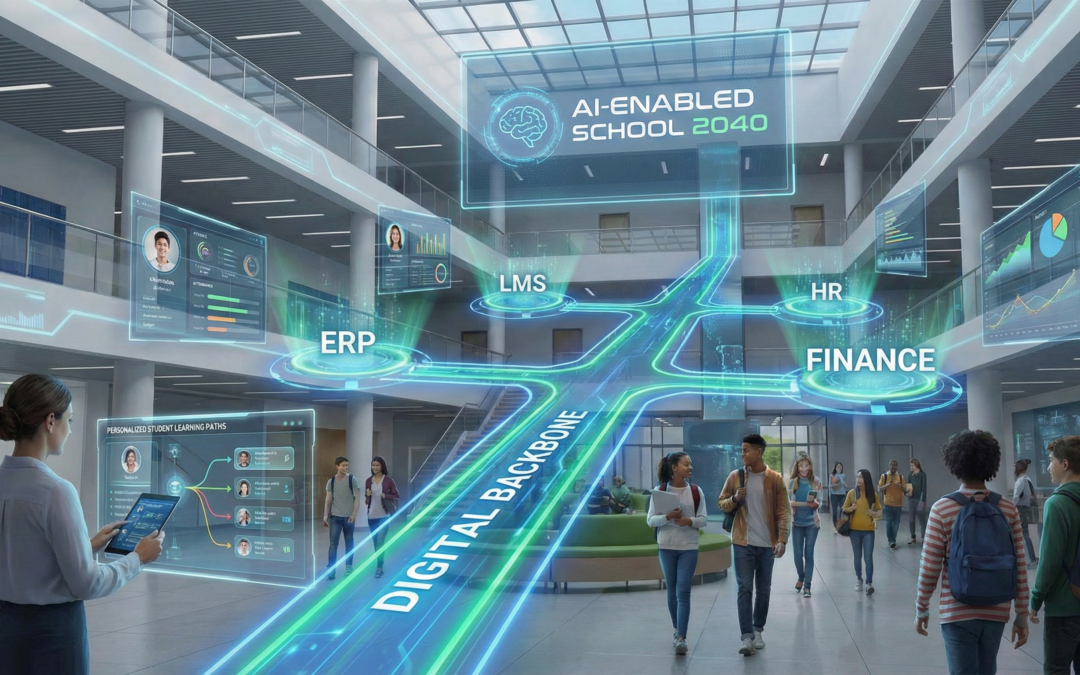
Artificial intelligence is only as powerful as the foundation it sits upon. In education, that foundation is a unified digital ecosystem—one where Enterprise Resource Planning (ERP), Learning Management Systems (LMS), Human Resources, and Finance modules don’t just coexist, but communicate seamlessly.
Why Fragmentation Fails AI
Many schools today operate with disconnected systems: one platform for student records, another for finance, a third for learning content, and spreadsheets filling the gaps. This fragmentation creates data silos that render AI implementation impossible. AI algorithms require comprehensive, real-time data to identify patterns, predict outcomes, and generate insights. When information is trapped in isolated systems, even the most sophisticated AI tools become ineffective.
The Power of Integration
A truly unified digital platform transforms how schools operate:
- Attendance data automatically feeds into learning analytics, helping identify students at risk of falling behind before grades drop
- Student performance metrics inform staffing decisions, revealing where additional teaching support is needed or which educators excel with specific learning challenges
- Financial insights directly support strategic planning, showing the real cost per student outcome and enabling evidence-based budget allocation
- HR systems connect with professional development needs identified through classroom data, creating targeted teacher training programs
This isn’t just about efficiency—it’s about creating an intelligent nervous system for your institution where every data point strengthens every decision.
The 2040 Reality Check
Schools clinging to fragmented systems face a stark future. By 2040, the gap between digitally unified institutions and traditional ones will be insurmountable. Schools without integrated platforms will struggle with chronic inefficiency, spending countless hours on manual data reconciliation, battling delayed decision-making that leaves problems unaddressed, and watching talented educators waste time on administrative tasks that should be automated.
Meanwhile, AI-enabled schools with unified backbones will offer personalized learning pathways that adapt in real-time, predictive interventions that support students before they struggle, automated administrative workflows that free educators to teach, and transparent reporting that builds trust with parents and oversight bodies.
Beyond Efficiency: Building Trust and Scale
The benefits of unified digital systems extend far beyond operational improvements. These platforms create the transparency modern education demands—parents can track their child’s progress in real-time, administrators can demonstrate accountability with data-driven reporting, and policymakers can measure educational impact with unprecedented clarity.
This transparency builds trust, while the scalability of unified systems allows successful practices to spread rapidly across classrooms, schools, and entire districts. As national transformation agendas increasingly emphasize educational excellence and digital readiness, unified digital infrastructure becomes not just an advantage but a requirement.
Taking the First Step
Building your digital backbone begins with honest assessment: What systems do you currently use? Where does data get trapped? What decisions are delayed by lack of information? The answers to these questions reveal your path forward—whether that’s integrating existing systems, migrating to comprehensive platforms, or building custom solutions that fit your institution’s unique needs.
The AI revolution in education won’t wait for schools to catch up. The digital backbone you build today determines whether your institution leads that revolution or struggles to survive it.
Next in series: Part 3 – Smart & Hybrid Classrooms
AI, Education, GCC
Building the Foundation of an AI-Ready Generation
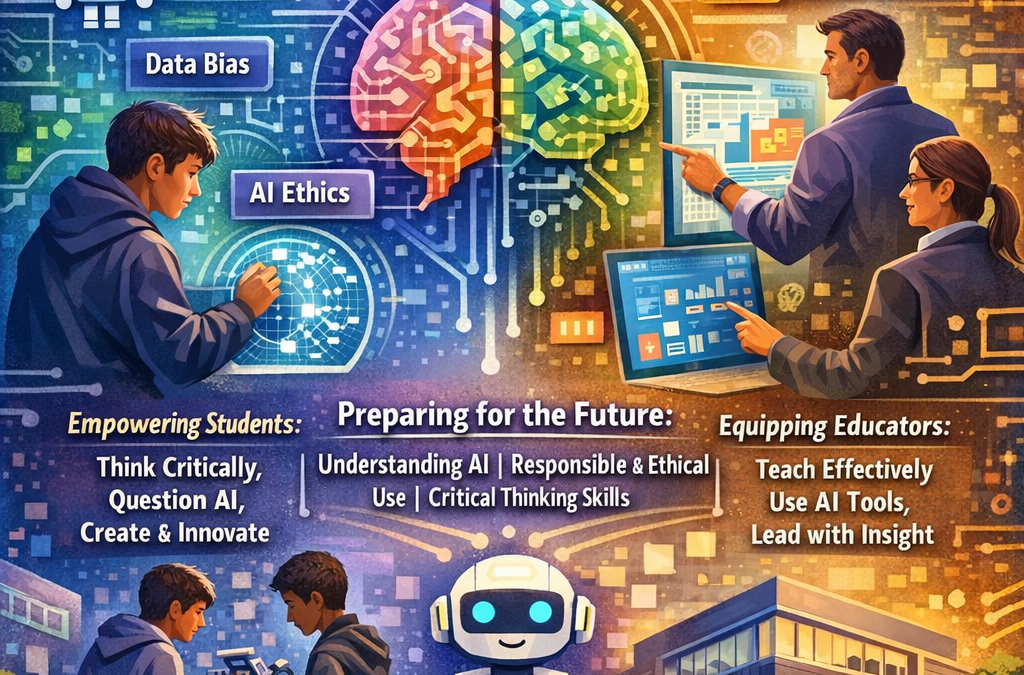
An AI-ready school begins with AI literacy, not just access to technology. By 2040, AI will be as fundamental as reading and mathematics. Schools must ensure that both students and staff understand how AI works, how to use it responsibly, and how to collaborate with it ethically.
For students, AI literacy means learning beyond tools—it includes understanding algorithms, data bias, automation, and decision-making. Students should be able to ask critical questions: How does this AI reach conclusions? What data does it use? What are its limitations? This prepares them to become creators and supervisors of AI, not passive users.
For educators and administrators, AI literacy is equally critical. Teachers must confidently use AI for lesson planning, assessments, differentiation, and student support. Leaders must understand AI-driven analytics to make informed academic and operational decisions.
By embedding AI literacy across grade levels and professional development programs, schools align with Vision 2040’s goal of producing digitally fluent, ethically grounded, and future-ready citizens.