Uncategorized
Book Summary
Born Dead, Die Alive is a thought-provoking and soulful manifesto that challenges readers to reimagine their existence in an age where technology is rapidly evolving—but humanity is struggling to keep up. Written by futurist Tariq Qureishy, the book urges readers to wake up, break free from unconscious living, and actively choose to be alive—emotionally, spiritually, and intellectually.
The title reflects a powerful idea: most people are born into a system that deadens creativity, purpose, and awareness. But through conscious choices and humane use of technology, we can “die alive”—having truly lived.
Buy here: https://amzn.to/4cytFKt
Key themes include:
• Reclaiming human potential in a world driven by AI and automation
• Creating meaningful work and connections
• Developing emotional intelligence, empathy, and inner awareness
• Rethinking education, leadership, and innovation from a values-based lens
This book serves as both a wake-up call and a guidebook for creating a better future—where technology empowers rather than enslaves.
________________________________________
Ratings (Based on Available Data & Reader Reviews)
Platform Rating
Goodreads (4.5/5 – niche readership)
Amazon (4.7/5 – thoughtful, deep, futuristic)
Critics and readers appreciate the book’s depth, clarity of vision, and humanistic philosophy—especially relevant for leaders, educators, and change-makers.
Buy here: https://amzn.to/4cytFKt
________________________________________
A Moving Story from the Book
One of the most powerful reflections in the book is when Qureishy shares a personal story about losing his father—and how, in the grief, he was forced to confront life’s deeper meaning. Instead of being crushed, it awakened something in him: the realization that most people are alive but not truly living.
This turning point led him to explore why so many people settle for numbness in a world bursting with opportunity. The story becomes a metaphor: death is inevitable, but a “living death” is optional.
He challenges us: What would it look like to live with eyes wide open? To live as if our life matters?
Buy here: https://amzn.to/4cytFKt
________________________________________
Top Quotes from Born Dead, Die Alive
1. “Most people are not afraid of dying. They are afraid of not having lived.”
2. “The future will be built not by those with the best technology, but by those with the most humanity.”
3. “If you’re living on autopilot, you’re not living. You’re surviving. And survival is not the purpose of life.”
4. “Die alive, not because you reached the end—but because you finally woke up.”
5. “We must design a world where technology serves consciousness, not consumerism.”
6. “Your humanity is your competitive advantage in the age of AI.”
7. “We can’t create the future unless we first learn how to be present.”
Buy here: https://amzn.to/4cytFKt

Uncategorized
Book Summary
Clear Thinking by Shane Parrish, founder of Farnam Street, is a deeply practical guide for making better decisions by mastering your mind. It’s not just about thinking better but removing the things that get in the way of clear thinking—like ego, fear, emotional reactivity, and social pressure.
Parrish emphasizes that we don’t need more intelligence or more information—we need to avoid the mental traps that cause poor decisions in critical moments.
Buy here: https://amzn.to/3GeFrOf
Key concepts include:
• The Enemies of Clear Thinking: ego, fear, emotion, and blind spots.
• The Power of Pause: slowing down to make room for reflection.
• Mastering Your Defaults: identifying and upgrading your automatic responses.
• The Personal Algorithm: a tool to pre-commit to values-based decisions.
Instead of giving you rules, Parrish gives you tools—habits and frameworks to design a better internal system for long-term success in business and life.
________________________________________
Ratings (Based on Major Platforms)
Platform Rating
Goodreads (4.42/5 from 11K+ reviews)
Amazon (4.6/5 from 3K+ ratings)
Audible (4.8/5 for clarity & narration)
Highly recommended for professionals, entrepreneurs, and anyone looking to level up their decision-making and self-mastery.
Buy here: https://amzn.to/3GeFrOf
________________________________________
A Moving Story from the Book
Parrish recounts a personal moment that sparked the creation of this book: he made a huge mistake during a professional meeting—not because he lacked knowledge, but because his ego got triggered. He responded defensively and emotionally, ruining a potential opportunity.
Afterward, he reflected, “If I had paused, if I had seen clearly in that moment, everything would’ve been different.”
This moment became a turning point. Parrish realized that the real enemy of success isn’t ignorance—it’s letting emotions or ego hijack your clarity. The story is a wake-up call: one poorly timed emotional reaction can derail years of progress.
The moving part? He didn’t just hide the mistake—he built a system to prevent it, and shared it with the world.
________________________________________
Top Quotes from Clear Thinking
1. “Your greatest enemy is not ignorance, it’s the illusion of knowledge and control.”
2. “Clear thinking begins with clear seeing—and clear seeing starts when emotion, ego, and fear get out of the way.”
3. “Master your defaults, or they will master you.”
4. “The pause is your power. It turns reaction into reflection.”
5. “You don’t rise to the level of your goals. You fall to the level of your systems.”
6. “When the pressure is on, what you’ve built beforehand is what shows up.”
7. “Designing your internal algorithm is the most valuable thing you can do to upgrade your decision-making.”
________________________________________
Buy here: https://amzn.to/3GeFrOf
Uncategorized
Book Summary
Never Split the Difference is a masterclass on high-stakes negotiation by former FBI hostage negotiator Chris Voss. Drawing from real-life FBI experiences, Voss challenges traditional negotiation tactics, emphasizing the psychological and emotional aspects over logic and compromise.
Buy here: https://amzn.to/3ExSKZq

Rather than meeting in the middle (splitting the difference), Voss argues for tactical empathy, calibrated questions, mirroring, and labeling emotions to gain the upper hand. Each chapter introduces powerful techniques backed by gripping hostage negotiation stories, business scenarios, and personal experiences.
The book ultimately teaches you how to:
• Gain trust rapidly
• Defuse tension
• Make people feel heard and understood
• Achieve better outcomes in business and life
?? Ratings (Based on Major Platforms)
Platform Rating
Goodreads ?????????? (4.38/5 from 130K+ reviews)
Amazon ?????????? (4.8/5 from 45K+ ratings)
Audible ?????????? (4.9/5 for narration & content)
Highly praised for its practical advice, engaging storytelling, and real-world applicability, especially in sales, relationships, leadership, and everyday decision-making.
________________________________________
A Moving Story from the Book
One particularly gripping story in the book is the negotiation with a bank robber holding hostages. Voss recalls using emotional intelligence and “tactical empathy” rather than brute force or demands. He didn’t say, “We’ll send in SWAT if you don’t surrender.” Instead, he used mirroring and labeling:
“It seems like you’re feeling trapped. Like there’s no good way out.”
This approach diffused the tension. The hostage-taker started talking. And eventually, without violence, surrendered. It was a powerful example of how empathy and listening can de-escalate the most dangerous confrontations—proof that emotional tools are stronger than logic or coercion.
The story isn’t just about hostage negotiations—it’s a metaphor for everyday conflicts, whether with clients, colleagues, or loved ones.
Buy here: https://amzn.to/3ExSKZq
________________________________________
Top Quotes from Never Split the Difference
1. “He who has learned to disagree without being disagreeable has discovered the most valuable secret of negotiation.”
2. “No deal is better than a bad deal.”
3. “Tactical empathy is understanding the feelings and mindset of another in the moment, and also hearing what is behind those feelings.”
4. “Yes is nothing without how.”
5. “The sweetest two words in any negotiation are ‘That’s right.’”
6. “We fall in love with ‘yes’, we fear ‘no’, but we live in ‘maybe’.”
7. “When the pressure is on, you don’t rise to the occasion—you fall to your highest level of preparation.”
Buy here: https://amzn.to/3ExSKZq
Uncategorized
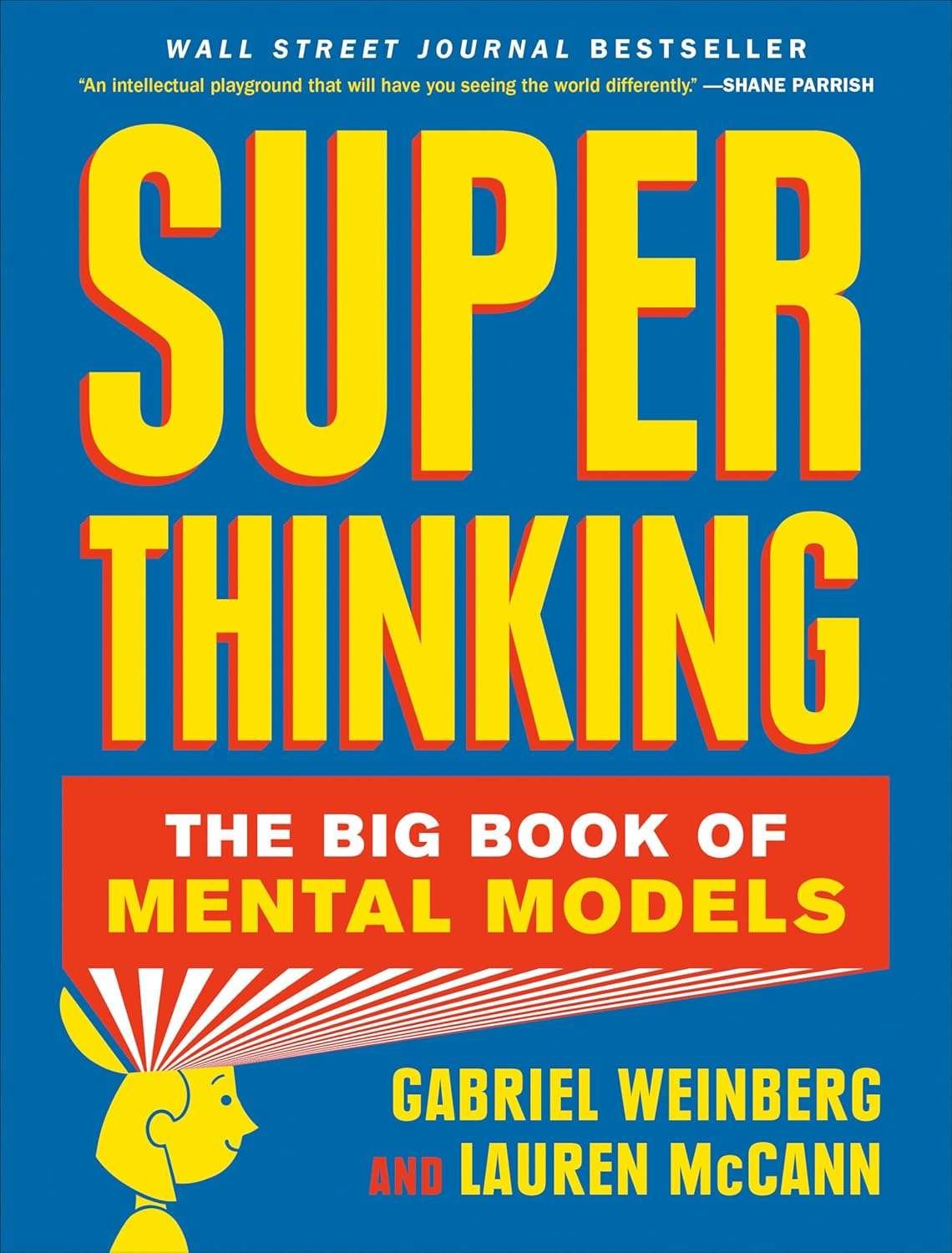
Book Summary: Super Thinking: The Big Book of Mental Models
Super Thinking is a comprehensive guide that introduces readers to the concept of mental models—powerful thinking tools used by the world’s smartest problem-solvers to make better decisions. The authors, Gabriel Weinberg and Lauren McCann, argue that success in life and work often comes down to how effectively we think. Mental models are essentially frameworks that help us understand how the world works.
Get your copy here: https://amzn.to/3Y0JAv8
The book offers over 300 mental models from various disciplines including economics, psychology, physics, and statistics. These models serve as shortcuts to help us avoid cognitive biases, spot opportunities, and make sound judgments. Rather than relying on one way of thinking, Super Thinking encourages building a broad mental toolbox—a concept inspired by Charlie Munger’s idea of a “latticework of mental models.”
Some of the key mental models include:
• Second-Order Thinking – Considering the long-term consequences of actions
• Opportunity Cost – Weighing what you give up for every choice you make
• Confirmation Bias – Being aware of our tendency to seek information that supports our beliefs
• Circle of Competence – Knowing what you know and admitting what you don’t
• Inversion – Thinking backwards from the outcome you want to avoid
The book is practical, filled with examples, and aims to train the reader’s mind to make clearer, more strategic decisions every day.
________________________________________
Get your copy here: https://amzn.to/3Y0JAv8
Book Review
Super Thinking is widely appreciated for its clarity, practicality, and wide-ranging applications. Readers praise the book for breaking down complex concepts into digestible, real-world advice. It doesn’t just teach you what to think—it teaches you how to think.
The writing is accessible and engaging, and the use of cartoons and illustrations makes abstract concepts easier to understand. Many readers find themselves returning to the book again and again as a mental reference guide. It’s especially useful for entrepreneurs, managers, students, and lifelong learners who want to improve their decision-making skills.
If you’re someone who wants to upgrade your thinking and avoid common mental traps, this book is a must-read.
________________________________________
Inspiring Story from the Book
One of the standout stories in the book is about second-order thinking in environmental policy. The authors explain how banning plastic straws might seem like a good idea at first glance (first-order thinking), but when viewed through the lens of second-order effects, it raises questions about the unintended consequences of alternatives. For instance, replacing plastic with paper or metal might lead to increased energy use or emissions. This story highlights how deep thinking—beyond surface-level solutions—leads to better decision-making.
It inspires readers to look beyond immediate results and think in systems and chains of effects, which is vital for long-term success in any field.
________________________________________
Best Quotes from Super Thinking
Here are some thought-provoking quotes from the book:
• “If you want to be smarter, the first thing to do is to build a latticework of mental models.”
• “You can’t make a good decision without understanding the forces at play.”
• “Second-order thinking means thinking farther ahead and thinking holistically.”
• “Mental models are how we understand the world, and better models lead to better thinking and better decisions.”
• “If you don’t know what you’re doing, you can’t know if you’re doing it well.”
Get your copy here: https://amzn.to/3Y0JAv8