
|
Getting your Trinity Audio player ready...
|
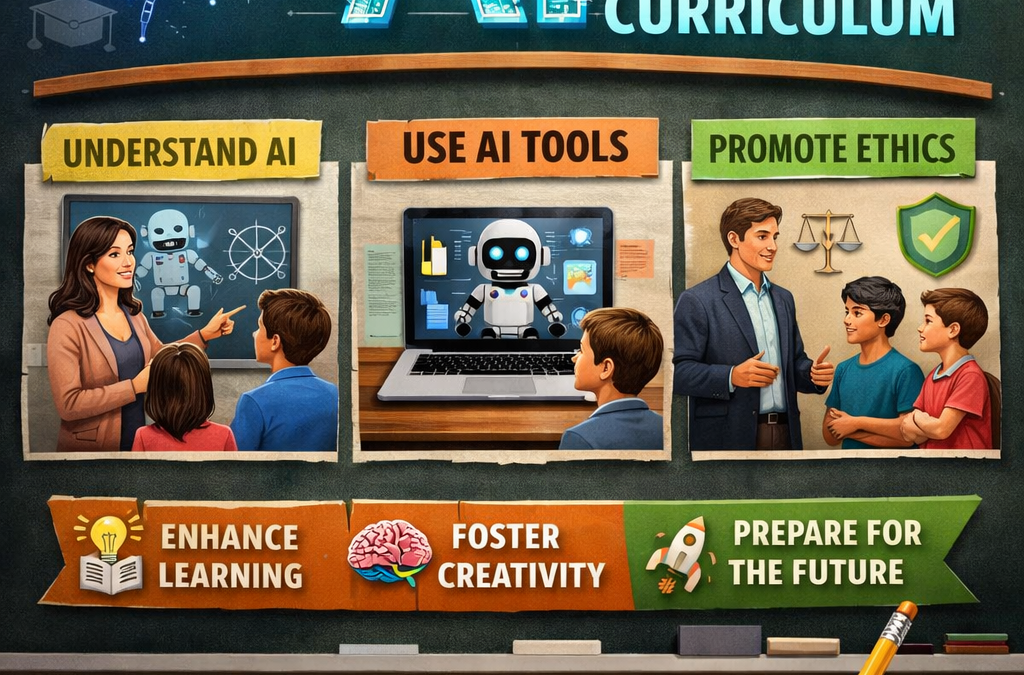
AI is no longer optional. Schools that fail to integrate AI risk becoming irrelevant in 3–5 years. Here’s a step-by-step plan for safe, effective AI integration.
- Teach AI as a Foundational Skill
AI should be treated like:
- Mathematics
- Reading
- Digital literacy
Students must understand:
- Basic AI concepts
- How AI tools work
- Ethical use
- Data privacy
- Use AI to Personalize Learning
AI can:
- Adjust lesson difficulty
- Identify learning gaps
- Provide summaries and explanations
- Support inclusive education
This shifts the teacher role from “lecturer” to learning coach.
- Create AI Labs & Hands-On Activities
Schools should establish:
- AI playgrounds
- Robotics labs
- No-code tools (Scratch, Machine Learning for Kids)
- AI project exhibitions
Practical experience is essential.
- Add AI Modules to Every Subject
Examples:
- English: AI writing & analysis
- Math: AI-driven problem generators
- Science: data modelling & simulations
- Social Studies: AI ethics, digital citizenship
- Train Teachers Intensively
Teachers need:
- AI safety training
- Classroom use-case training
- Awareness of AI risks
- Certification pathways
(Google, Microsoft, UNESCO, PISA-Aligned AI programs)
- Establish AI Use Policies
Schools must define:
- What AI students may use
- What AI teachers may use
- Academic honesty policies
- Data protection practices (aligned with PDPL or national laws)
Finally, I think, AI is not replacing teachers—it is empowering them. Early adopters will lead the future of education.