Personal Improvement
 Some people are naturally positive and optimistic, whereas others tend to see the world in a more negative light and always think the glass is half-empty. Therefore, it is only natural that some people tend to complain more than others do. However, complaining is not always related to how pessimistic or unhappy a person is. Most of us have things we complain about, yet there are some people that seem to complain about everything.
Just because someone complains a lot, does not necessarily mean they are unhappy. Obviously, there is some connection between what happens in someone’s life and the things that they complain about. When a lot of bad events occur, one is more likely to complain than when everything is rosy. Some people though, seem to complain a lot regardless of life’s circumstances. We all know of people who are always complaining and never seem to stop.
There are different reasons why people complain. For some people, complaining comes forth out of a true sense of unhappiness. They are unhappy about themselves or about their lives and they express this by complaining to others about their bad fortune. When people are that unhappy it does not really matter what happens in their lives, because they will always find something to complain about. They need to complain, because for them it is a way of coping with their unhappiness that they have learned is effective.
This is different to the every day complaining most people do. We all complain sometimes, about little things that happen to us, like being stuck in a traffic jam or being turned down for a job. However, because most of us are not truly unhappy we do not have the need to complain all the time. When no bad events take place in our lives, we simply cease to complain. This is not the case with so-called compulsive complainers.
People do not only complain incessantly because they are unhappy, for some complainers it is more of a  bad habit that they have picked up. These are the kind of people who either just need to complain for no good reason, or they are so used to complaining all the time that they do not even notice that they are doing it. You can recognize them by their casual way of complaining. They might walk into your house and mention that traffic was a nightmare, the weather sucks, they are not feeling too well and that something in your house smells funny.
A final reason why some people complain a lot is because it makes them feel better. These people are not necessarily unhappy people, but by complaining about every little thing that bothers them, they actually feel better. In other words, they burden other people with all their problems and worries, making those people feel bad, while they in turn end up feeling great. There is nothing wrong with complaining, we all need to do it now and again, but the trick is to not over do it. The last thing you want is to end up being known as one of those people who complains about everything.

Personal Improvement
“A man is but the product of his thoughts. 
What he thinks, he becomes.”
Mahatma Gandhi
“Positive thinking will let you do everything better
than negative thinking will.”
Zig Ziglar – Personal development guru
These are two powerful quotes. Combined, they tell us that if we think positively, we’re likely to enjoy positive results. Negative thinking, on the other hand, can lead to outcomes we don’t want.
Positive and negative thoughts can become self-fulfilling prophecies: What we expect can often come true.
If you start off thinking you will mess up a task, the chances are that you will: You may not try hard enough to succeed, you won’t attract support from other people, and you may not perceive any results as good enough.
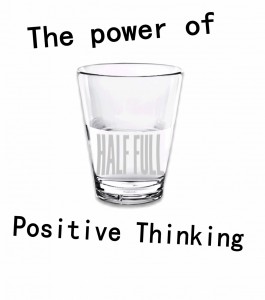 Positive thinking, on the other hand, is often associated with positive actions and outcomes. You’re drawn to, and you focus on, the positive aspects of a situation. You have hope and faith in yourself and others, and you work and invest hard to prove that your optimism is warranted. You’ll enthuse others, and they may well “pitch in” to help you. This makes constructive outcomes all the more likely.
When it comes down to it, positive, optimistic people are happier and healthier, and enjoy more success than those who think negatively. The key difference between them is how they think about and interpret the events in their life.

Personal Improvement
 Not many people know that personal development helps achieve life success. Personal development gives you the skills that you need in order to improve your life in general. It also helps you become a better person as you live by it each day. It makes you more calm, relax, and self-fulfilled.
Personal development inspires you to choose a path that you want for your life. It makes you happier on the inside and it makes you satisfied on the outside. Without goals, personal development will not work. Everybody must live by their own personal development goal.
You start setting goals that you think will make your life improve. But what will make your life improve? Improvement of life means that you have to be happier, gain more freedom, have a better lifestyle, and have satisfaction. When you set goals, this could also include your family and not just for yourself. Remember, what makes your loved ones happy makes you happy too!
You see, everybody wants to achieve success but not everybody has a clear understanding of what success means to them.  First, ask yourself what success means to you. You have to let go of all the things in your mind. Clear your mind and let your mind roam freely. Sometimes, there are conditioned mental attitudes already in your inner mind and what you have to do is just let go of them so that you may be able to pursue the life course you want for yourself.
Detach yourself from mental attitudes from society which includes all the other people in your environment except yourself. Focus on yourself and remove all the negativity. The freedom you can experience when you remove the negative vibe from your mind is just priceless. You will feel peace and tranquility and the emotional stress level you have goes down.
If your actions are motivated by what you feel inside you, the more positive energy you get. So if you are feeling happy with no negativity in you, the more likely you will be geared to success. Positivity is the key to personal development.
If you start living by personal development and use the positive energy in you and apply it to your daily life, you will notice the big difference in your life. Your actions will be more positive and this will lead you to unconsciously performing the right actions that will lead you to a successful life.

Personal Improvement, Research & Reports
Here you will learn why it is so useful to follow a personal development plan (PDP). You will also study three guidelines that illustrate a general personal development plan template. Once you’ve assimilated the information in this section, you will be able to move on to additional articles in the series that provide examples of personal development plans for specific life changes.
Mohandas Gandhi, the still-influential Indian leader who devoted his life to the achievement of peace and fulfillment, had this to say:
Your beliefs become your values
Your values become your thoughts
Your thoughts become your words
Your words become your actions
Your actions become your habits
Your habits become your destiny…
–Mahatma Mohandas Gandhi, 1869-1948
By reading through that sequence, you can understand that your innermost beliefs have a tremendous formative impact on the values and thoughts that externalize to in the form of your actions: what you do in and with your life. As those actions become habitual, you are taking control of your ultimate destiny in life.
At first, that might sound a little disconnected from compared with your everyday activities and goals, but apply it to something that affects people every day -smoking. If you really believe that smoking is harmless or that you will live forever, then you will never stop smoking!
But, if you had someone close who suffered an early death because of smoking, or after you experience the birth of your first child, you begin to think twice about the issue.
These experiences have an impact on your view of reality and also on the value that you place on your own life. When your beliefs carry you through that transition, then giving up smoking becomes much more likely! Your personal development plan template is all about that.
The Triple-Loop Cycle
There is a triple-loop personal development plan template (figure 1, below) that expresses the same idea in a different way:

The Doing Loop
Your outcomes -the things you do or achieve in life- result from the actions you’ve taken.
The personal development plan template shows you can improve your performance, and thus your outcomes, through practice. Suppose you build brick barbecues. Your second attempt will always turn out better and require less effort than the first.
Of course, building a better barbie doesn’t require any fundamental shift in your learning, and it doesn’t have a significant impact on the inner you!
The Thinking Loop
This part of the personal development plan template figure shows how you change the way you conceive, think about, or understand a problem: “I don’t know about building a barbie, because every time we have a barbie it rains.
So…hmmm…I’ll build an extension to the porch that will be big enough to shield the barbie and keep us dry!”
In this loop, you have applied reasoning and motivation to create a new set of actions.
The Being Loop
At this step in your personal development plan template, you’ve made a leap in how you see yourself as a person, a change in who you are.
“I’ve built backyard barbies as a favor for many of my friends and relatives, and I’ve given advice to scores of others. I’m tired of doing it for free. I always wanted to be my own boss by the time I was 50. I am going to make money from doing this…I’ll hire some workers to build barbies the way I teach them. I’ll be the buyer and project manager. The first step to my new job will be to get a team together to provide service for my new business!!”
In this third loop of the personal development plan template, your beliefs about you role in life has changed. And new beliefs drive new actions that result in you taking charge of your financial destiny.
The Experiential Learning Cycle
Next, study the personal development plan template below (figure 2), because it describes how adults learn. As you use it, think of a past experience or situation that you wanted to learn from.
The stages in the reflective process are probably familiar to you. If you’ve ever had help from a coach, a tutor, a mentor, even a boss or manager-anyone who’s a good listener-you’ve done this, and you’ll recognize each of these stages.
But real life is not so neat and tidy. Whenever you go through a change cycle, you develop new insights that take you to-and-fro-instead of one neat progression; you jump to different places throughout the personal development plan template cycle.

This type of personal development plan template is often used to help people take a good look at a plan that they’ve taken action on, analyze its results, and revise the plan to make things better.
At the top of the diagram is the personal or professional concrete experience that motivated you to explore it. Maybe it’s happened too often, or it results in time and energy being wasted…you’ll have your own reasons.
Next, you write down the events that led up to the event. You explore how it unfolded. And you might go back to the first step to gather additional information, to recall things you didn’t notice at the time.
Third, you theorize about why it happened. You analyzed the string of events. You can review how things unfolded by going back a step before you move on in the cycle.
Last, you consider what you can do to achieve a better future outcome. Once again, you might need to jump back and forth to the different steps of this personal development plan template cycle in order to develop the plan that works best for you.
Reflective Learning Cycle
Look at the diagram below (figure 3) to understand the entire learning cycle more fully.

A concrete experience compels you to gather facts concerning the incident, and theorize why it happened. It must be something that evokes your commitment to time and effort -something that will result in a significant payoff.
Reflect on how it made you feel, evaluate your behavior, and consider any consequences. Replay the event in your mind, including what others said and how you felt about that. Gather information so that you can formulate an abstract conceptualization, but don’t analyze, criticize, or judge yourself harshly.
Next in this personal development plan template comes the natural process of re-thinking and re-evaluating the string of events. This is a very analytical step. You are in a different emotional space by now, and with the new information from your previous efforts you can formulate a revised plan.
The fourth and last step is synthesis -you bring all your thoughts together into an action plan. There is where you decide what you will do differently.
You also have to put your personal development plan template into effect -otherwise, it’s just an intellectual exercise- but you always have the option and capability to translate your insights into new actions, new plans, as needed.
Tips for Success
- Don’t force it; don’t rush things or view it under the microscope for too long. If you need to step away from it -take a walk or bake a cake- do it and then go back to it.
- Even more importantly, remember that the engine-room of the personal development plan template process is stage one -and the new awareness it brings. Mine that experience for details, and switch on your peripheral vision.