
|
Getting your Trinity Audio player ready...
|
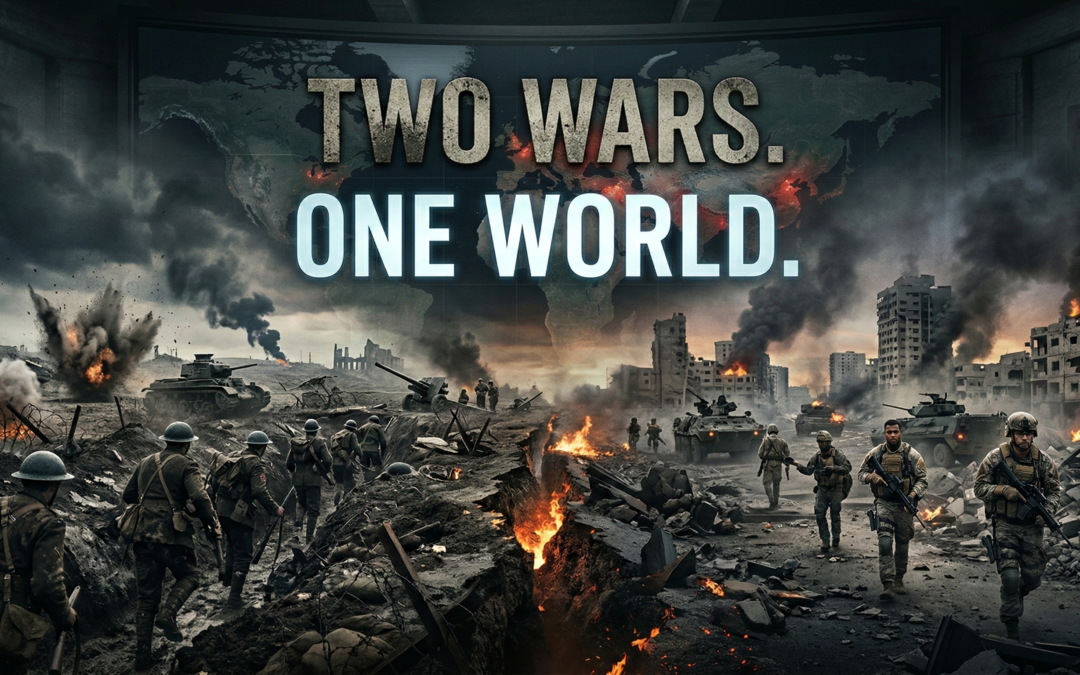
TWO WARS. ONE WORLD.
The Israel–Iran Crisis & the Pakistan–Afghanistan War Explained
Best outcomes. Worst outcomes. What happens next. And what it means for all of us.
Two wars that were “never supposed to happen” just broke open simultaneously — one in the Middle East involving Iran directly for the first time, one on the India–Pakistan doorstep. And both erupted in the same week.
Most people woke up this week to news that felt unreal. Pakistan bombed Afghanistan’s capital. The United States and Israel launched airstrikes on Iran. Iran’s Supreme Leader Ali Khamenei was killed. Missiles struck Tel Aviv and Beit Shemesh. Hezbollah fired rockets for the first time since 2024. These are not normal headlines. This is not background noise. This week, in late February and early March 2026, two separate wars escalated dramatically — and the shockwaves are going to be felt for years.
This blog post will walk you through both conflicts: what actually happened, what the best and worst case outcomes look like, how to navigate the next 3–6 months, and what kind of world these wars are building toward over the next 1–5 years. Written for people who care but don’t have time to follow seventeen news feeds.
PART I: THE MIDDLE EAST — FROM CEASEFIRE TO REGION-WIDE WAR
What Actually Happened
Start with Gaza. In October 2023, Hamas launched the deadliest attack on Israel in its history, killing 1,195 people and taking 251 hostages. Israel’s military response has been devastating: over 73,000 Palestinians have been killed — the majority civilians — and 81% of all structures in Gaza have been damaged or destroyed. Every single hospital in Gaza has been damaged. Over 97% of schools are gone.
A ceasefire technically came into force on October 10, 2025. But it was fragile from the start. Israel continued striking alleged militant targets inside Gaza almost daily, killing over 400 more people since the ceasefire began. Israel now physically occupies more than half the Strip. As of this week, 37 major humanitarian aid organizations have been banned from operating in Gaza and the West Bank, following Israel’s demand that they hand over detailed staff data. Aid deliveries — already inadequate — are expected to worsen further.
Then came the escalation nobody was fully prepared for. Iran, under immense domestic and geopolitical pressure following the death of Supreme Leader Khamenei on February 28, launched ballistic missiles at Israel — including strikes that hit Beit Shemesh and areas near Jerusalem. The United States, in a joint operation with Israel called “Operation Epic Fury,” launched sustained airstrikes on Iranian military and nuclear infrastructure. The very scenario analysts had warned about for years — a direct U.S.–Israel versus Iran confrontation — arrived on March 1, 2026.
Simultaneously, Hezbollah — which had observed a ceasefire with Israel since November 2024 — fired rockets into northern Israel on March 1 for the first time in over a year. The region, already on fire, is now at its most dangerous point in a generation.
Best Case: What Good Looks Like (Next 3–6 Months)
| ? MIDDLE EAST — BEST CASE SCENARIO
Iran, reeling from the death of Khamenei and the destruction of key military assets, is unable to mount sustained retaliation. A faction within the Iranian leadership — pragmatists who have long sought economic relief — uses the power vacuum to signal openness to negotiation. The U.S. and EU broker an emergency diplomatic channel. Operation Epic Fury is suspended. In Gaza, international pressure forces a genuine humanitarian corridor to open, with Arab nations (Saudi Arabia, UAE, Jordan) co-managing civilian aid and governance. Hezbollah stands down, calculating that a full war with Israel while Iran is weakened would be suicidal. A ceasefire in Gaza holds, reconstruction begins in limited areas, and a path toward a Palestinian civil administration — however imperfect — starts to take shape. The world averts a regional war. Just barely. |
Worst Case: What Disaster Looks Like
| ? MIDDLE EAST — WORST CASE SCENARIO
Iran’s new leadership, facing enormous internal pressure to respond decisively, escalates rather than backs down. Iranian proxies — Hezbollah in Lebanon, Houthi forces in Yemen, militias in Iraq and Syria — launch coordinated strikes on Israeli and American targets across the region. Israel responds with strikes on Lebanon and Syria. The Strait of Hormuz, through which 20% of the world’s oil passes, is threatened. Saudi Arabia and other Gulf states are pulled in. A full regional war involving at least six countries breaks out. Oil prices spike past $150 a barrel. Global markets enter a recession. Gaza — already devastated — becomes completely inaccessible to aid, and a mass famine unfolds. The world, distracted by the Pakistan–Afghanistan conflict and the Iran crisis simultaneously, fails to respond to Gaza in time. |
PART II: PAKISTAN vs. AFGHANISTAN — THE WAR THAT CAME OUT OF NOWHERE
What Actually Happened
This one genuinely did come fast — at least in its most acute phase. But the roots go back years.
Pakistan has been fighting a devastating insurgency from the Tehreek-e-Taliban Pakistan (TTP) — the Pakistani Taliban — which is distinct from but historically linked to the Afghan Taliban. Since the Afghan Taliban retook Kabul in 2021, the TTP has dramatically intensified attacks inside Pakistan. In 2025 alone, Pakistan saw a 75% increase in deaths from militant violence compared to the year before, with over 3,400 people killed. Suicide bombings in Islamabad. Attacks in Bajaur. Ambushes in Balochistan. Pakistan blamed Afghanistan for sheltering the TTP and repeatedly demanded action.
The Afghan Taliban refused to crack down. Analysts say they’re unwilling to move against the TTP partly because of historical ties, and partly because they fear TTP fighters defecting to ISIS–Khorasan Province — their own most dangerous rival.
After a mosque bombing in Islamabad killed 36 people on February 6, 2026, Pakistan’s patience snapped. On February 21, the Pakistan Air Force struck seven alleged TTP and ISIS–K camps in Nangarhar, Paktika, and Khost provinces. Afghanistan said the strikes killed 18 civilians. Pakistan denied targeting civilians.
That started the chain reaction. On February 26, Afghanistan launched retaliatory operations across the border. Pakistan responded with “Operation Ghazab Lil Haq” — striking targets in Kabul, Kandahar, and Paktia. On February 27, Pakistan’s Defence Minister declared: “Our cup of patience has overflowed. Now it is open war.” Pakistan struck 46 locations across Afghanistan including the historic Bagram air base. By March 1, both sides were claiming hundreds of enemy casualties, cross-border shelling was ongoing, Pakistan held a stretch of Afghan territory in the Zhob sector, and the Torkham border crossing — a critical trade and transit route — was effectively closed. The world was watching two wars erupt simultaneously.
Best Case: What Good Looks Like (Next 3–6 Months)
| ? PAKISTAN–AFGHANISTAN — BEST CASE SCENARIO
Qatar, which successfully brokered a fragile ceasefire between the two countries in October 2025, re-enters mediation. Pakistan achieves some of its stated military objectives — degrading TTP infrastructure in specific border provinces — and can claim enough of a win domestically to pause operations without losing face. The Taliban, under pressure from China (which has strong economic interests in Afghan stability), agrees to a symbolic crackdown on TTP leadership. A ceasefire is agreed within weeks. The Torkham border crossing reopens. A formal talks process begins with international guarantors. Pakistan does not pursue further deep strikes. The conflict ends as a fierce but limited episode rather than a sustained war between two nations. |
Worst Case: What Disaster Looks Like
| ? PAKISTAN–AFGHANISTAN — WORST CASE SCENARIO
The Taliban, unable to back down without appearing weak in front of their own fighters, escalates. Drone strikes and suicide bombings hit Pakistani urban centers — Peshawar, Islamabad, Lahore. Pakistan, a nuclear-armed state, faces an existential security crisis on two fronts: the Afghan Taliban externally and the TTP internally. The Pakistani economy — already fragile after years of IMF dependence — collapses under war costs. India watches the instability on its western neighbor with alarm and begins repositioning forces along its own borders. Millions of Afghan refugees, already displaced inside their own country, flee toward Iran, which is simultaneously dealing with its own crisis. The entire region from Tehran to Lahore becomes a single arc of instability. The worst: with Pakistan under existential pressure, nuclear posturing cannot be ruled out. |
PART III: HOW TO NAVIGATE THE NEXT 3–6 MONTHS
For Ordinary People
You don’t need to be a policymaker to have a response to this moment. Here is what matters practically.
- Stay grounded, not overwhelmed. Both conflicts are being covered with enormous noise and propaganda from all sides. For the Middle East, trust Al Jazeera, Reuters, AP, BBC, and Haaretz alongside each other for balance. For Pakistan–Afghanistan, ACLED, Dawn (Pakistan’s leading newspaper), and Al Jazeera’s South Asia desk are the most reliable.
- Understand the economic exposure. If you are in South Asia, Central Asia, or the Gulf — or do business in these regions — the next three months carry real economic risk. Oil prices, remittances, trade routes, and currency stability in Pakistan and Iran could all be affected significantly.
- Watch the India factor closely. India shares borders with both Pakistan and Afghanistan. India also has deep energy ties to Iran and diplomatic equities in the Middle East. How New Delhi responds over the next weeks will shape the regional picture significantly.
- Support humanitarian organizations, but verify them. In Gaza, with 37 NGOs now banned from operating, the remaining organizations need urgent support. Look for verified UN agencies (WFP, UNICEF) and well-documented international groups still operating. In Pakistan–Afghanistan, UNHCR and ICRC are the most credible actors.
- Beware of misinformation spikes. Both wars are generating enormous amounts of false images, fabricated casualty numbers, and manipulated video. Reverse-image search anything that looks extreme before sharing.
For Businesses and Investors
- Energy hedging is urgent. The direct U.S.–Israel strikes on Iran mark a qualitative escalation. Any further Iranian retaliation near the Strait of Hormuz should be treated as a credible risk through at least Q2 2026. If your business is energy-intensive, lock in supply contracts now.
- South Asia supply chains: Pakistan is a major textile and manufacturing hub. Ongoing conflict and border closures will disrupt supply chains running through Karachi and the Torkham corridor. Companies sourcing from the region should develop contingency plans.
- Defense technology sector: Both conflicts are accelerating demand for missile defense systems, drones, cyber warfare capabilities, and satellite intelligence. This is a structural tailwind regardless of specific outcomes.
- Currency exposure: The Pakistani rupee and Iranian rial are under serious pressure. If you have exposure to either, act now.
PART IV: THE LONG SHADOW — 1, 3, AND 5 YEARS FROM NOW
In 1 Year (Early 2027)
If the worst is avoided, here is what the world will look like in 12 months. Iran will have new leadership — possibly more pragmatic, possibly more hardline depending on how the succession struggle plays out. The Iranian nuclear program will still be the central issue. Israel will be dealing with enormous domestic pressure: the war costs, the international isolation, and an economy strained by multi-front security spending. Gaza will still be in ruins, with reconstruction far from complete and a political governance solution nowhere near agreed.
For Pakistan–Afghanistan, a ceasefire will likely hold — but nothing structural will have changed. The TTP will still exist. Afghanistan will still refuse to crack down. And Pakistan will face the same choice again at the next major terrorist attack. The cycle will not have been broken; it will have been paused.
In 3 Years (2029)
This is where the divergence between best and worst paths becomes stark. In a better scenario, Iran has undergone enough internal political evolution to enter a new nuclear deal, reducing regional tension and allowing Saudi–Iranian normalization to deepen. A Palestinian civil authority is governing some parts of Gaza with Arab financial backing. A two-state solution remains deeply unlikely, but the catastrophic conditions in Gaza have stabilized.
In Pakistan and Afghanistan, the three-year horizon is about whether Pakistani democracy can survive the economic and security pressure. Pakistan has an IMF program, a nuclear arsenal, 230 million people, and a collapsing trust in civilian institutions. If the military tightens its grip further — as it historically does during external crises — the country could be governed by a hybrid authoritarian structure by 2029. Afghanistan under the Taliban will remain economically isolated and internally repressive. The humanitarian situation for Afghan women especially will continue to be catastrophic.
In 5 Years (2031)
The five-year picture is about tectonic shifts, not tactical ones. Here is what these two crises are contributing to a reshaped world.
- The post-American Middle East is arriving. U.S. direct military involvement in striking Iran marks a dramatic commitment — but also a potential overextension. If the strikes succeed in degrading Iran’s nuclear capability without producing a sustainable political outcome, the U.S. will face the same question it faced in Iraq: what comes after the bombs? A Middle East that has passed through this crisis without a genuine political framework will be more unstable in 2031 than it was in 2021.
- South Asia is the next great power battleground. China, India, Russia, and the U.S. all have vital interests in the Pakistan–Afghanistan space. As Pakistan weakens and Afghanistan stays frozen under Taliban rule, the vacuum will be filled by competing outside powers. India’s regional role will expand. China will deepen its Belt and Road investments in Pakistan while maintaining Taliban contacts. The balance in this region will define much of the 21st century’s strategic competition.
- A generation shaped by war. In Gaza, in Kabul, in Islamabad, in Tehran — millions of children are growing up in the shadow of bombs, displacement, and collapsing institutions. The radicalization, trauma, and loss of human capital from these years will have consequences for decades. This is not abstract. Every generation shaped by war produces the politics of the generation after it.
- The climate–conflict nexus is intensifying. The Pakistan–Afghanistan border region is among the most climate-stressed on the planet. Water scarcity, extreme heat, and crop failures are already driving displacement that creates fertile ground for militant recruitment. The wars we are watching now are not separate from the climate crisis — they are, in part, produced by it, and they will in turn deepen it.
CONCLUSION: What We Owe This Moment
“The most common way people give up their power is by thinking they don’t have any.” — Alice Walker
It is easy to feel helpless watching two wars unfold in the same week — especially when both involve nuclear-armed states, regional superpowers, and decades of unresolved grievances. But helplessness is a choice, not a fact.
The Pakistan–Afghanistan war did not come from nowhere. It came from years of a Pakistan that could not defeat its internal insurgency and an Afghanistan that could not (or would not) police its own territory. It came from a global community that abandoned Afghanistan the moment the last U.S. helicopter left Kabul. Those were choices made by governments, institutions, and voters.
The Middle East crisis did not come from nowhere either. It came from a Gaza ceasefire that was, as Palestinians themselves warned, designed more to reduce international attention than to stop the killing. It came from a peace process that has been in suspended animation for two decades. It came from the failure of the international community to enforce the laws of war consistently.
The next three to six months will be decisive — not inevitable. Ceasefire diplomacy can work. International pressure can shift military calculations. Ordinary people demanding accountability from their governments still matters, even when it doesn’t feel like it.
Watch these conflicts. Understand them. Talk about them. Push your representatives on them. And do not let the sheer number of crises lull you into the numbness that allows the worst outcomes to happen by default.
The world is not on autopilot. Neither are we.
SOURCES
Wikipedia: Gaza War (updated March 2, 2026) | Wikipedia: 2026 Afghanistan–Pakistan War | Al Jazeera Conflict Reporting | The Washington Post, February–March 2026 | Times of Israel Liveblog, March 1, 2026 | Human Rights Watch, February 2026 | CNN South Asia Desk | Stimson Center Middle East Analysis | ACLED Conflict Data | Pakistan Institute for Conflict and Security Studies
This post is an independent analytical synthesis of publicly available reporting. It does not represent endorsement of any government, military, or political position.