
|
Getting your Trinity Audio player ready...
|
Trust, Ethics, and Security in the AI Age
Data is the engine behind every AI system — but without proper governance, it quickly becomes a risk rather than an asset. Schools that are truly ready for the AI era don’t treat data governance as an afterthought. They build it into the foundation.
Why This Matters Now
By 2040, educational institutions will be generating and storing more sensitive data than ever before — from student learning patterns and behavioral analytics to staff records and third-party platform integrations. The stakes are high, and the window to build the right systems is now.
Strong data governance means having clear, enforceable policies across five critical areas: who owns the data, who has consented to its use, who can access it, how long it is retained, and how AI systems are permitted to use it. Without clarity on all five, schools expose themselves — and the people they serve — to serious risk.
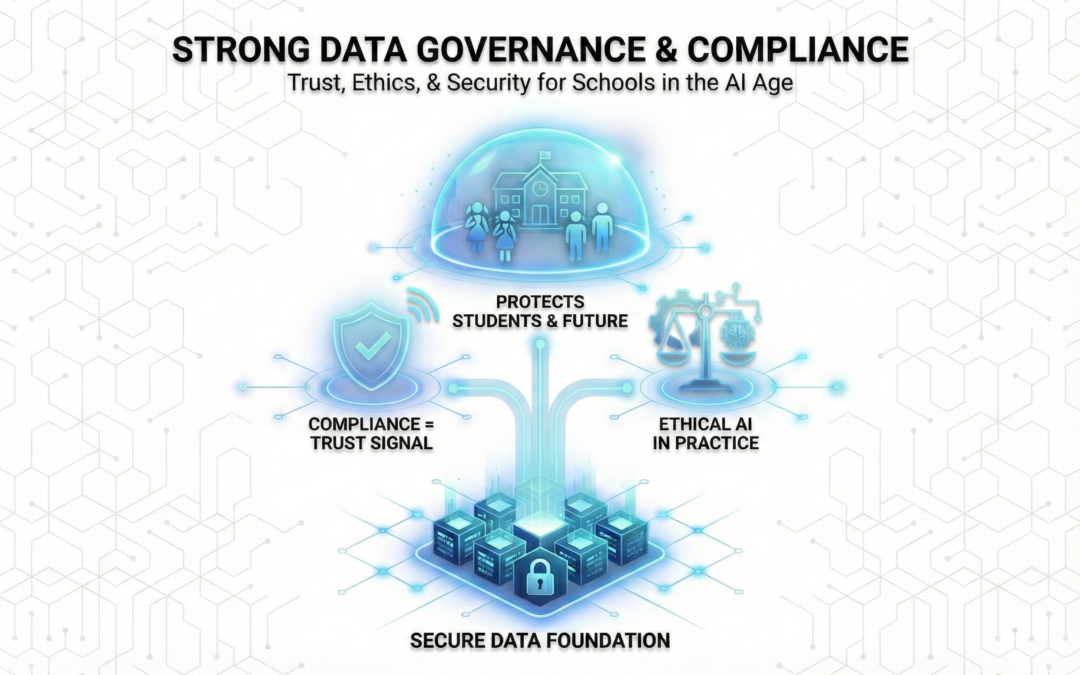
Compliance Is a Trust Signal, Not Just a Legal Obligation
Meeting national regulations and aligning with international standards such as GDPR or ISO 27001 does more than keep schools out of legal trouble. It sends a powerful message to families, regulators, and institutional partners: we take your trust seriously.
Compliance, done well, becomes a competitive advantage.
Ethical AI Requires Ethical Data Practices
Automated decisions — whether about student progress, resource allocation, or staff performance — carry real consequences. Ethical AI frameworks ensure those decisions are fair, explainable, and accountable. They prevent bias from being quietly embedded in algorithms and ensure that humans remain meaningfully in the loop.
Data governance is not separate from ethics. It is ethics, made operational.
The Bottom Line
A school that protects its data protects its students, its staff, its reputation, and its long-term future. In the AI age, data governance is not a compliance checkbox — it is a core institutional value.