
|
Getting your Trinity Audio player ready...
|
The most dangerous thing a school can do right now is prepare students for a world that no longer exists.
Think about it: the jobs that will define 2040 haven’t been invented yet. The industries that will employ today’s ten-year-olds are still being imagined in labs, garages, and late-night conversations between people who haven’t even met. And yet most curricula still orbit around frameworks built for the industrial age — fixed subjects, fixed paths, fixed assumptions about what “success” looks like.
Future-focused schools are breaking that mold.
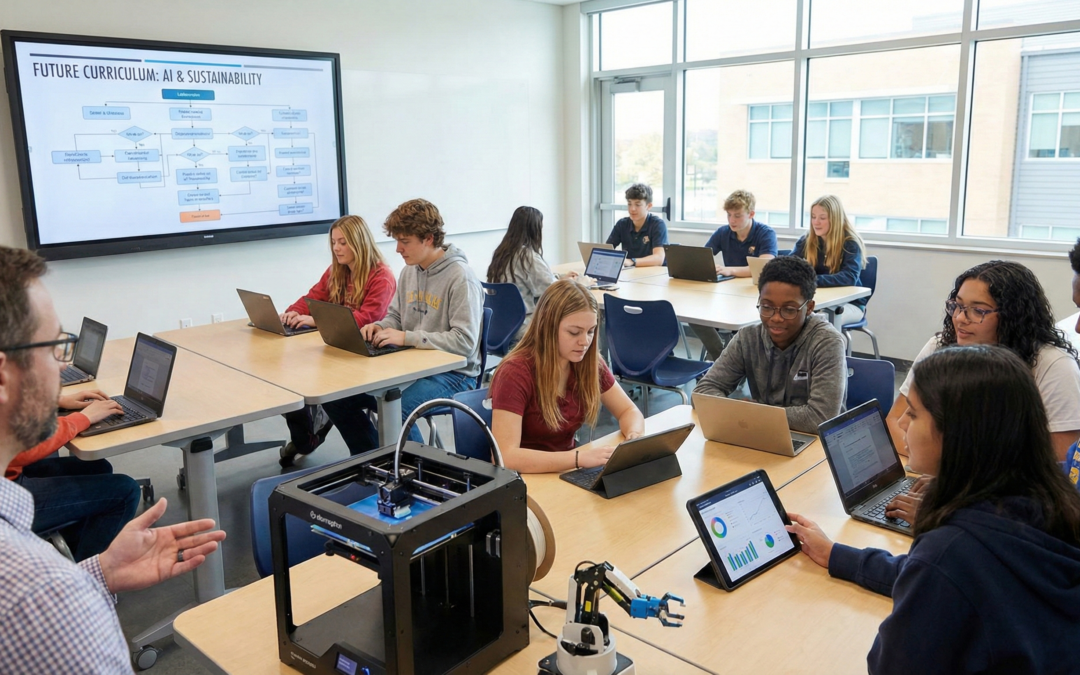
Rather than forcing every student down the same corridor, AI-ready institutions are designing curriculum tracks built around where the world is actually heading. Think AI and Data Science, Green Technologies and Sustainability, Digital Health, Smart Cities, Creative Technologies, and Entrepreneurship — not as electives or afterthoughts, but as core pillars of learning. These aren’t trendy additions to a traditional timetable. They’re a complete re-imagining of what school is for.
The shift goes deeper than subject names. Interdisciplinary learning replaces rigid silos, so a student exploring climate solutions might weave together data science, economics, engineering, and communication — because that’s exactly what solving real problems requires. Project-based learning puts students inside genuine challenges rather than textbook simulations.
And this is where AI becomes a genuine game-changer. Not as a gimmick, but as a guide. AI tools can analyze a student’s strengths, learning patterns, and passions — then help map a pathway toward careers that actually fit who they are. Personalization at scale, something no single teacher managing thirty students could ever fully deliver alone.
The schools that will lead by 2040 aren’t the ones scrambling to react when the future arrives. They’re the ones already living in it.