
|
Getting your Trinity Audio player ready...
|
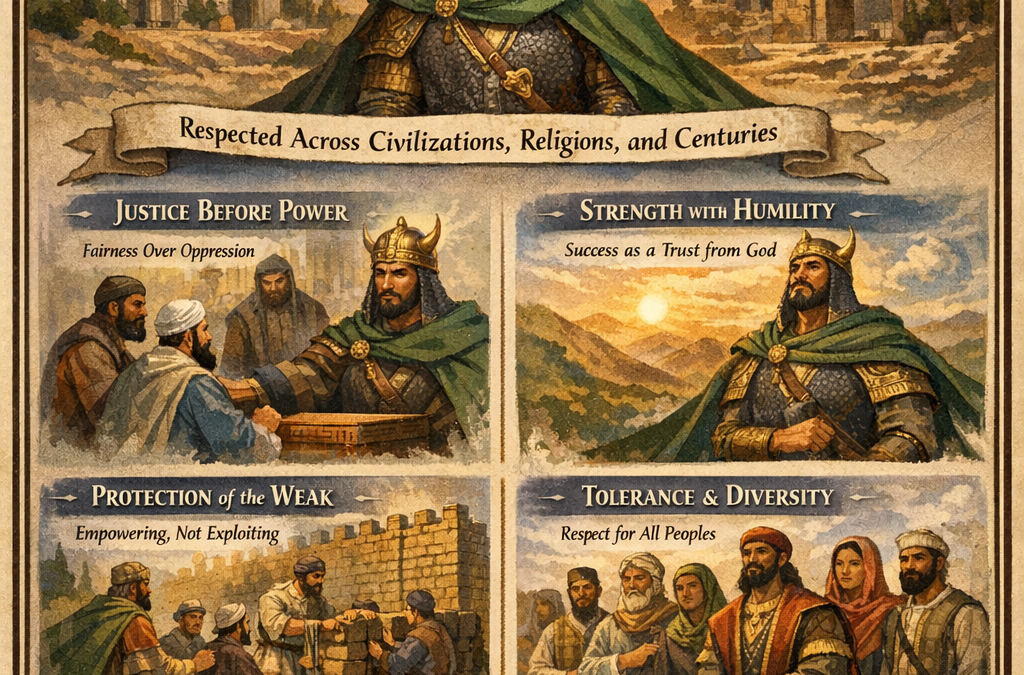
History remembers many conquerors, but very few leaders earn respect across civilizations, religions, and centuries. Zul-Qarnayn stands apart not merely because of the territories he ruled, but because of how he ruled. His mention in the Qur’an elevates him beyond political success and places him in the category of moral leadership — a ruler whose power was restrained by responsibility and whose authority was shaped by accountability to God and humanity.
Often identified historically with Cyrus the Great, Zul-Qarnayn ruled an empire that extended across vast regions, yet his legacy is not one of destruction. Instead, it is a legacy of justice, restraint, tolerance, and service. These are qualities rarely associated with absolute power, which makes his example even more relevant today.
Justice Before Power
One of the most striking qualities of Zul-Qarnayn was his approach to justice. When given authority over people, he did not apply a single rigid standard blindly. Instead, he distinguished between wrongdoing and righteousness, clearly stating that punishment was for oppression and reward for goodness. This shows a deep understanding that justice is not about control, but about balance.
Lesson for us:
In our daily lives — whether as parents, managers, teachers, or entrepreneurs — authority should never be used for ego or dominance. Fair judgment, empathy, and consistency build trust. Power without justice destroys relationships; justice with authority strengthens them.
Strength Combined with Humility
Despite commanding immense power, Zul-Qarnayn consistently acknowledged that his success came from God. When people praised him or attributed achievements to his greatness, he redirected credit upward. This humility prevented arrogance — a flaw that often corrupts leaders once success arrives.
Lesson for us:
Personal success, career growth, or financial stability should not lead to pride. Gratitude keeps ambition clean. When humility guides progress, success becomes sustainable and meaningful rather than hollow and destructive.
Protection of the Weak
One of the most powerful narratives associated with Zul-Qarnayn is his response to a community threatened by chaos and destruction. Instead of exploiting their fear or demanding wealth, he focused on empowering them. He involved the people in building a protective barrier, teaching cooperation, effort, and shared responsibility.
This was not a ruler who created dependency; he created resilience.
Lesson for us:
Helping others does not mean doing everything for them. True leadership empowers people with skills, structure, and confidence. In families, workplaces, and societies, sustainable solutions come from collaboration, not control.
Tolerance and Respect for Diversity
Zul-Qarnayn ruled over diverse cultures, religions, and ethnic groups, yet history records no forced conversions or cultural erasure under his leadership. His governance recognized human dignity regardless of belief or background — a principle far ahead of its time.
Lesson for us:
In a world polarized by differences, tolerance is not weakness; it is wisdom. Respecting others’ beliefs, opinions, and cultures allows societies — and even workplaces — to function peacefully. Moral strength lies in coexistence, not domination.
Accountability Beyond This World
Perhaps the most profound element of Zul-Qarnayn’s character is his awareness that power is temporary and accountability eternal. His decisions reflected an understanding that leadership is a test, not a privilege — and that ultimate judgment lies beyond worldly success.
Lesson for us:
When decisions are guided by conscience rather than convenience, integrity follows naturally. Whether no one is watching or everyone is watching, ethical consistency defines true character.
Applying Zul-Qarnayn’s Model Today
In modern life, we may not rule empires, but we all hold influence — over children, teams, businesses, communities, and even ourselves. Zul-Qarnayn’s example teaches us that:
- Success must be tied to responsibility
- Strength must be guided by compassion
- Authority must serve justice
- Leadership must uplift, not suppress
- Faith and ethics must anchor ambition
His life reminds us that greatness is not measured by how much we control, but by how much good we enable.
Zul-Qarnayn represents a rare harmony of power and principle. At a time when leadership is often equated with dominance, his story offers a corrective — a reminder that the highest form of leadership is service, and the strongest legacy is moral impact.
If we adapt even a fraction of his values into our personal and professional lives, we do not merely improve ourselves — we contribute to a more just and humane world.